On this page
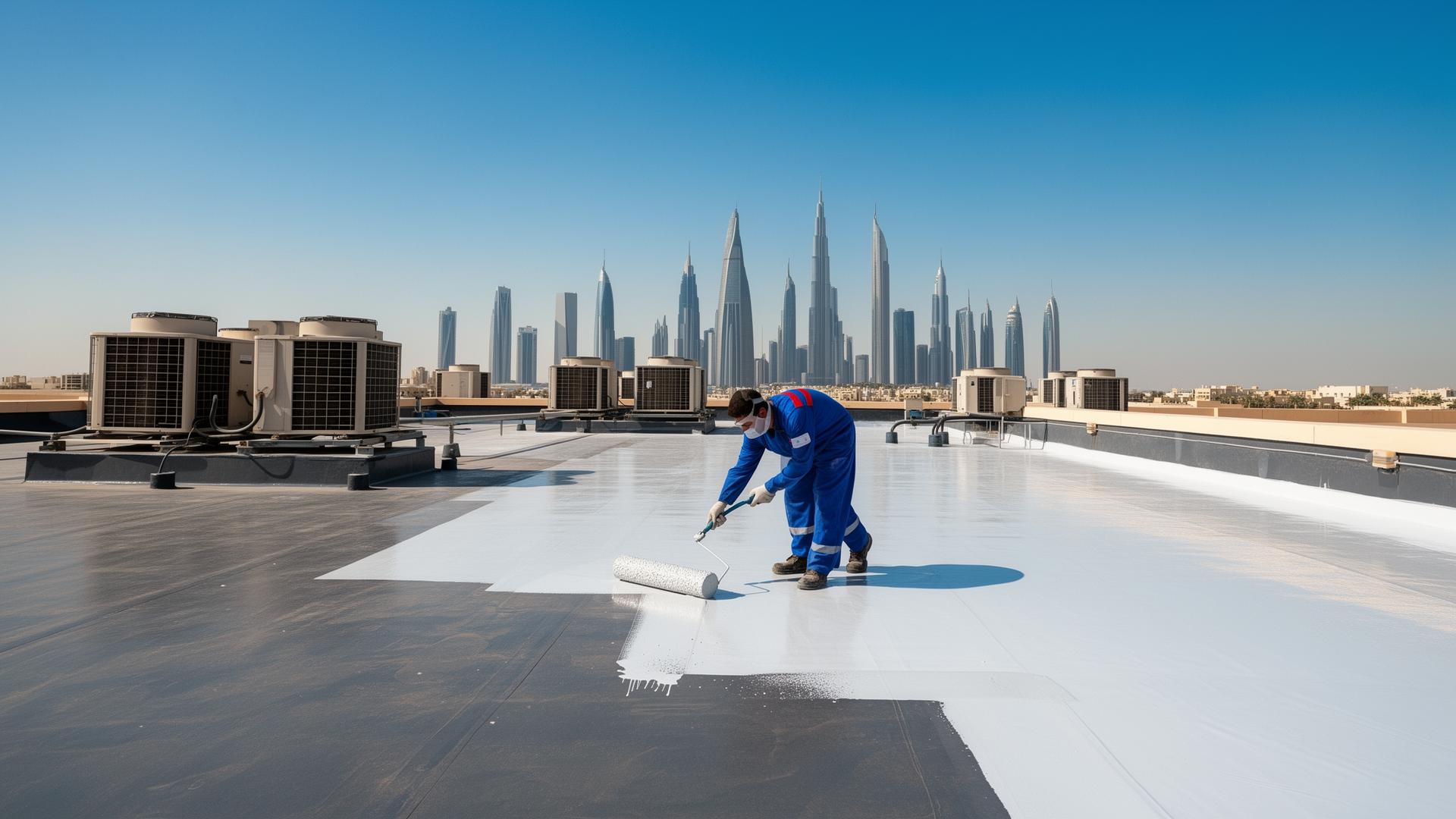
Polyurea is the highest-performing spray-applied elastomeric coating in commercial use. It cures in seconds, bonds to virtually any properly prepared substrate, bridges live cracks, and survives ponded water, UV cycling, salt-laden air and the 50 °C surface temperatures the UAE rooftop envelope imposes. This guide is the technical reference TEXSA's application engineers and consultants use to specify polyurea systems for waterproofing, protective lining, roof rehabilitation, blast mitigation, bed-liner work and infrastructure rehabilitation across the UAE.
It is written for the people who write the specification, sit in the value-engineering meeting and stand on the substrate at handover — not as marketing copy. Where a number appears, it is a typical published range; refer to the product Technical Data Sheet for project-specific values.
What is polyurea?
Polyurea is the cured reaction product of an isocyanate component (the A-side, or ISO) and a resin blend (the B-side) whose primary reactive species are amine-terminated polyether resins and chain extenders. The reaction is extremely fast — gel times of 3–6 seconds and tack-free in under a minute — so the material must be processed through plural-component, heated, high-pressure equipment that meters the two components at a precise ratio (typically 1:1 by volume) and impingement-mixes them inside the spray gun.
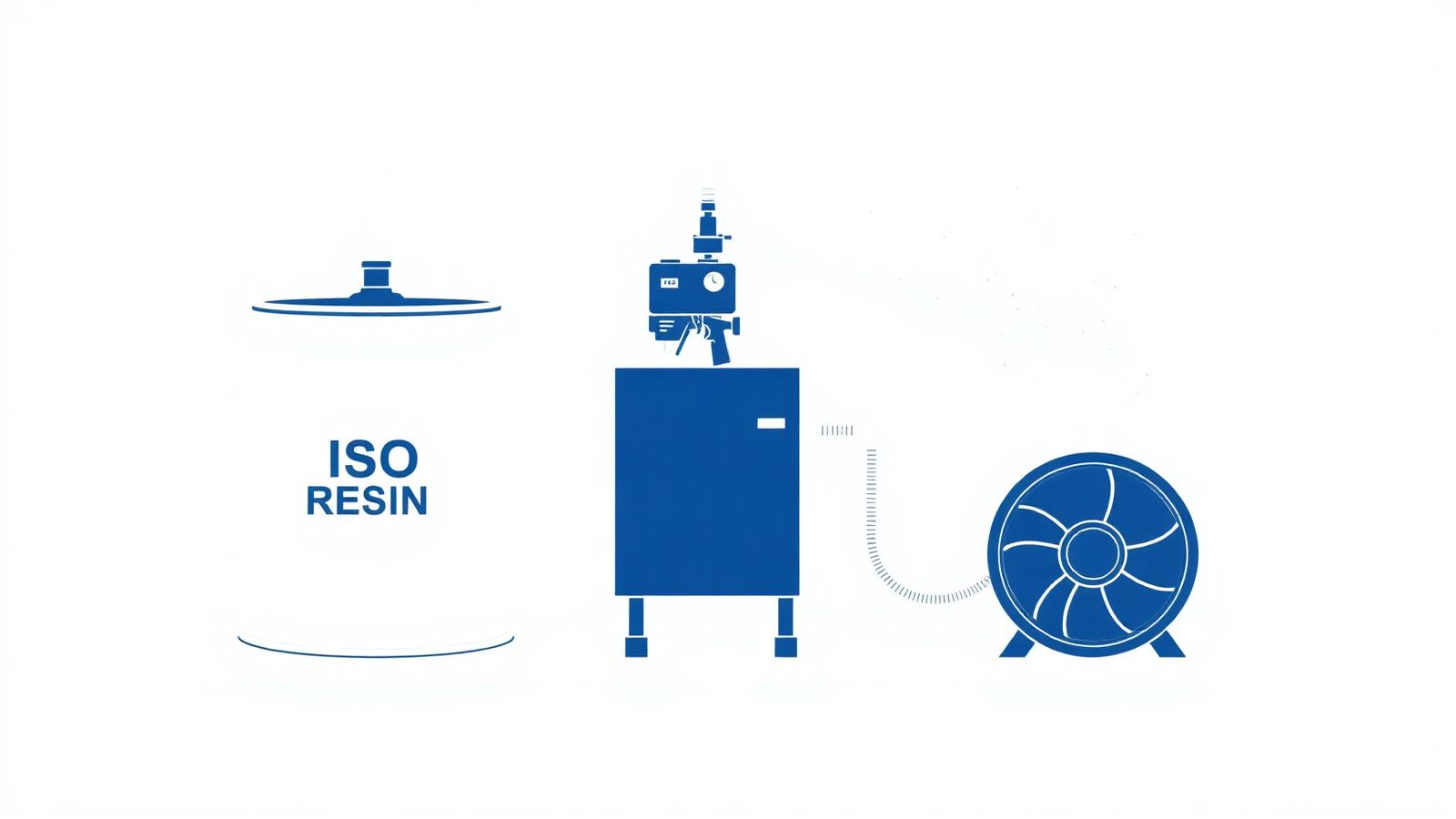
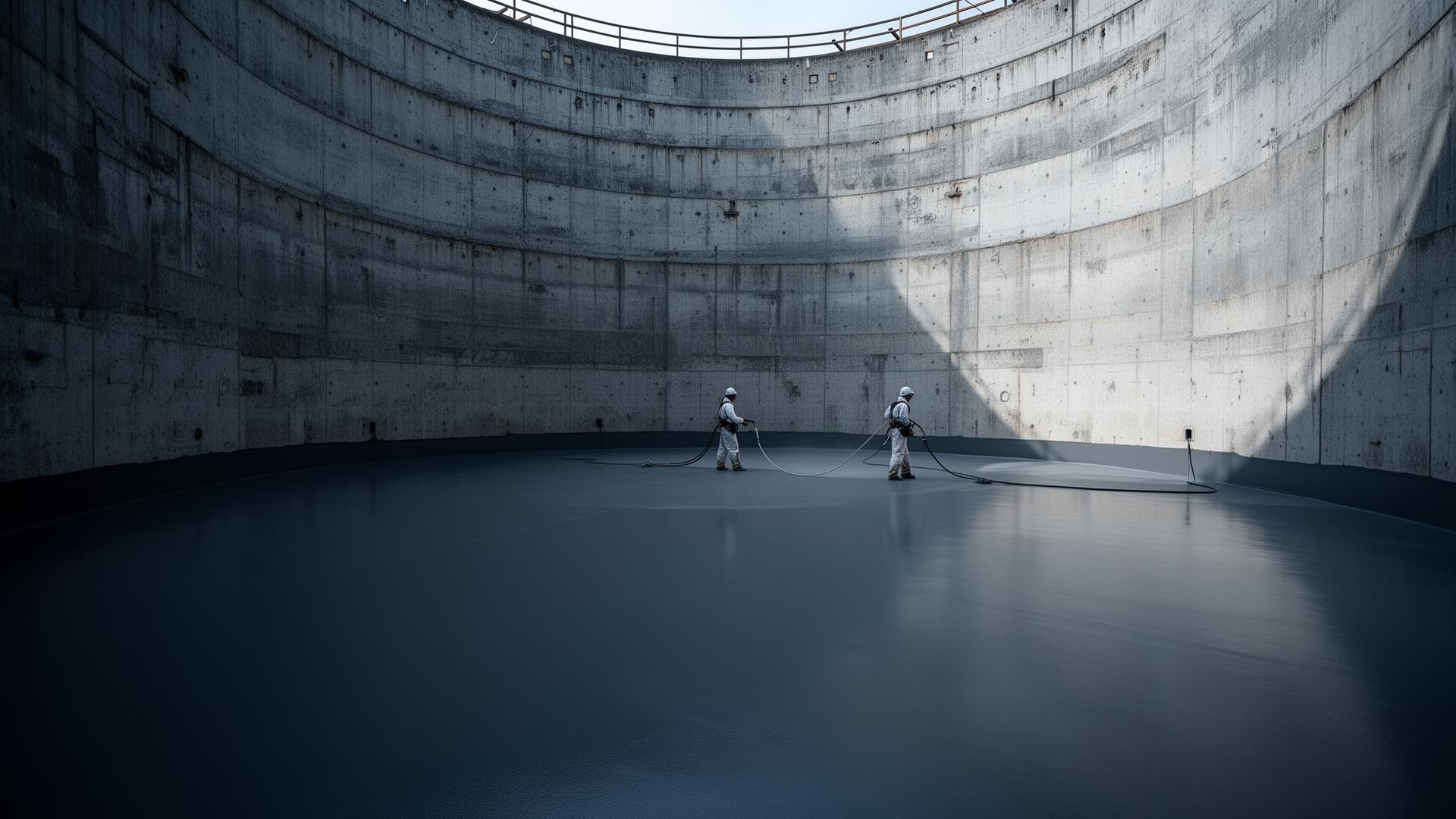
Plural-component hot-spray process
ISO and RESIN drums feed a heated proportioner; both components are pressurised to 2,000–2,500 psi and heated to 65–75 °C before atomising at the gun. The reaction begins on contact, not in the line.
The result is a seamless, monolithic elastomeric film with no panel joints, no overlaps and no weak points to track. Unlike membrane systems that rely on overlap quality, polyurea performs as a single continuous skin from drain to upstand to parapet.
Why it cures in seconds
The isocyanate–amine reaction is several orders of magnitude faster than the isocyanate–polyol reaction that builds polyurethanes. That is the chemistry behind polyurea's signature gel time and moisture insensitivity.
Types of polyurea
Pure polyurea
100 % amine-terminated B-side reacted against an aromatic or aliphatic ISO. Highest elongation, highest tensile strength, fastest gel time and the lowest moisture sensitivity of the family. The benchmark system for tanks, roofs, blast and infrastructure work.
- Elongation 300–450 %, tensile 16–24 MPa
- Gel 3–6 s, return to service in 30–60 minutes
- Excellent waterproofing, chemical and abrasion resistance
- Premium cost; demands skilled applicators and calibrated equipment
Hybrid polyurea
A blended B-side containing both amines and polyols (the polyurethane crosslinker). Longer gel time (10–30 s) makes it more forgiving, but elongation, recovery and moisture insensitivity drop relative to pure polyurea. A practical, lower-cost option for general waterproofing where pure performance is not required.
- Elongation 200–350 %, gel 10–30 s
- More tolerant of spray-parameter drift
- Acceptable for podiums, planters and general roof work
- Not recommended where standing water, dynamic cracks or chemical exposure are present
Aromatic polyurea
Built on an aromatic isocyanate (typically MDI-based). Mechanically superb and cost-effective, but yellows and chalks on prolonged UV exposure. The chalking is cosmetic, not structural — performance is retained — which is why aromatics dominate buried, tank, concealed and topcoat-protected work.
- Workhorse chemistry for tank lining and buried structures
- Specify a UV-stable topcoat (PU or aliphatic polyurea) on exposed surfaces
- Cost level: $$
Aliphatic polyurea
Built on an aliphatic isocyanate (HDI or IPDI). UV-stable, colour-stable, with no chalking. Used as a finish coat on aromatic systems or as a single-coat system on architecturally exposed roofs, podiums, walkways and decorative or branded surfaces.
- UV-stable colour retention
- Used as finish coat over aromatic at 0.2–0.4 mm DFT
- Cost level: $$$$ — typically reserved for exposed and aesthetic work
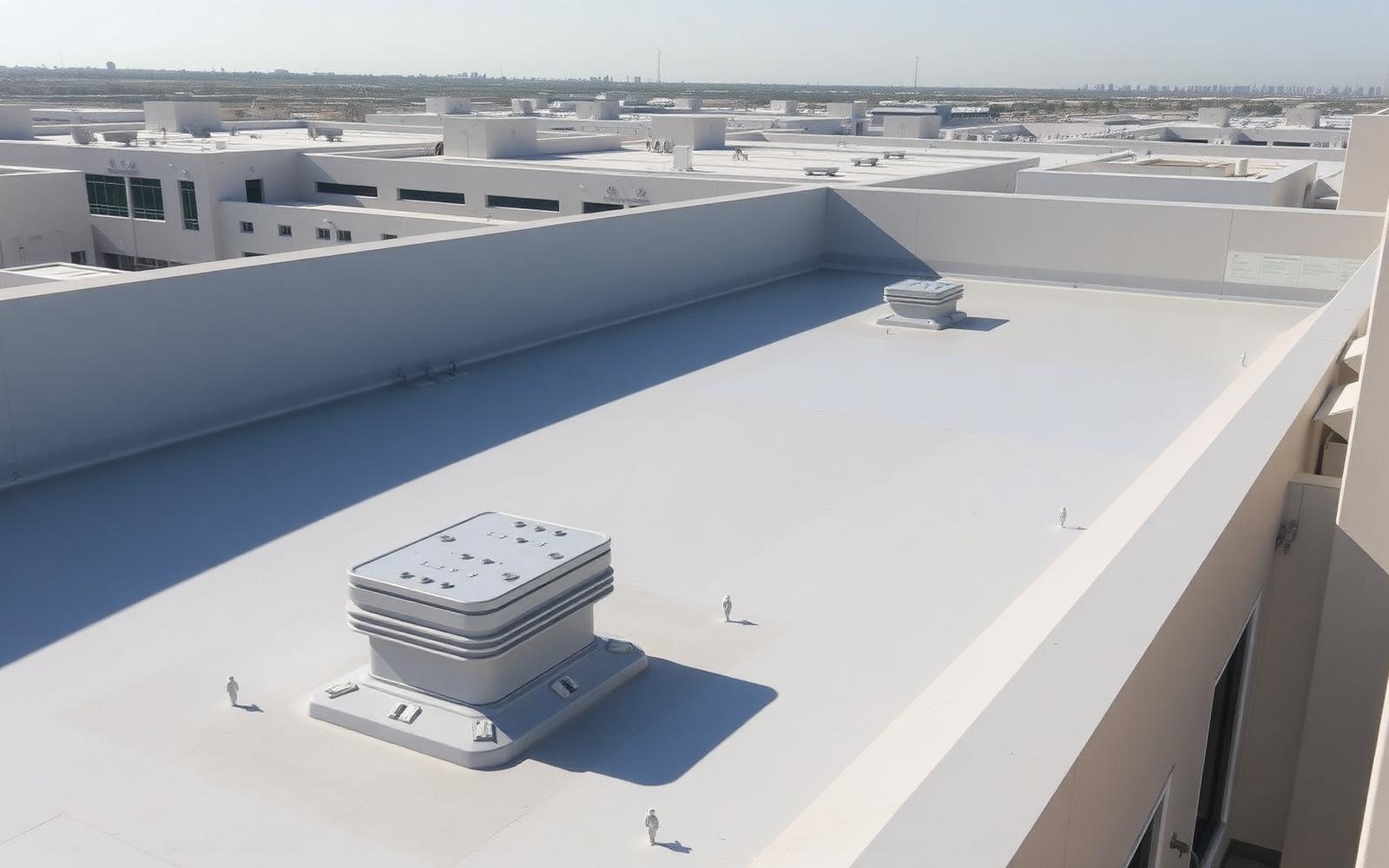
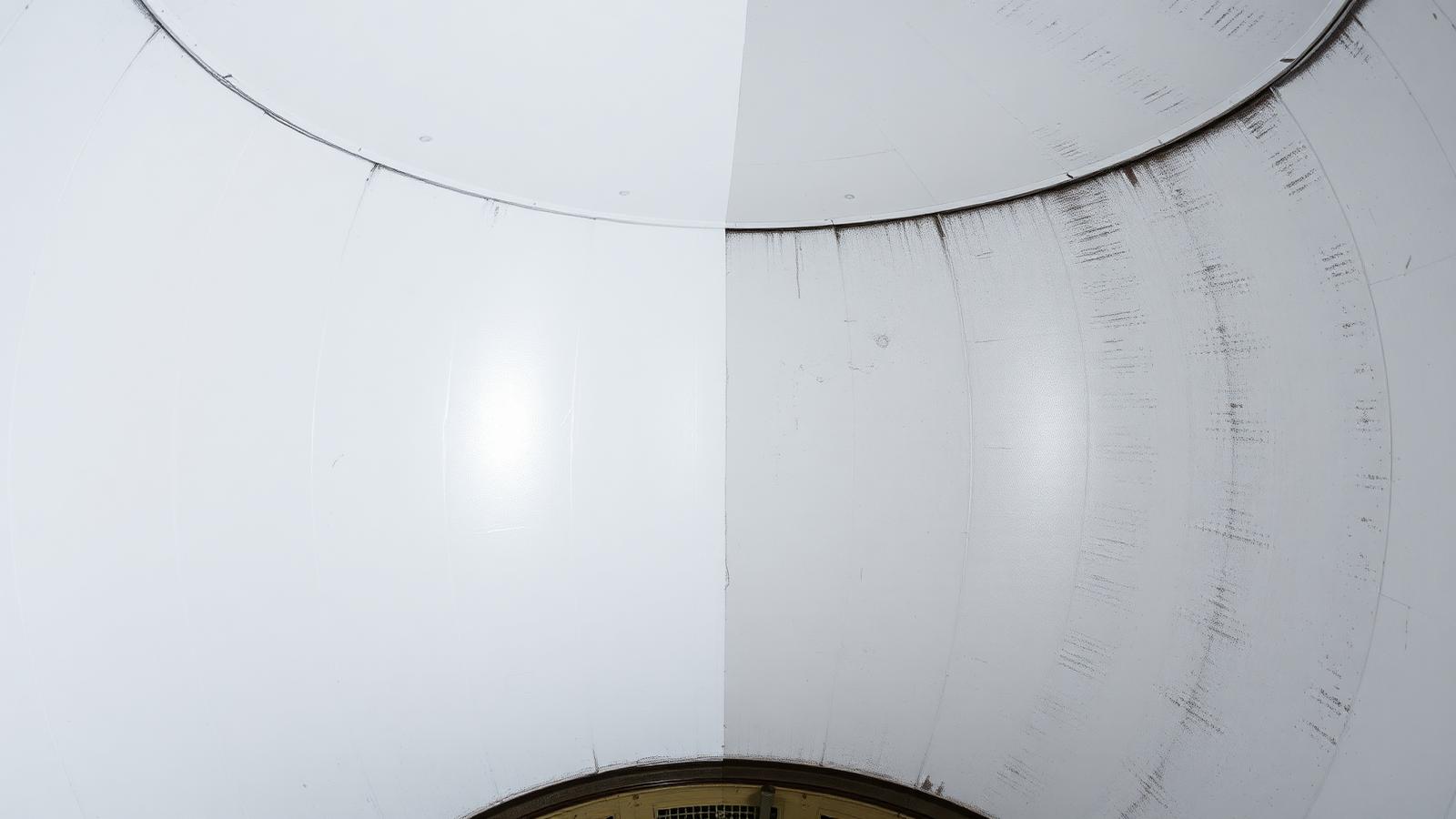
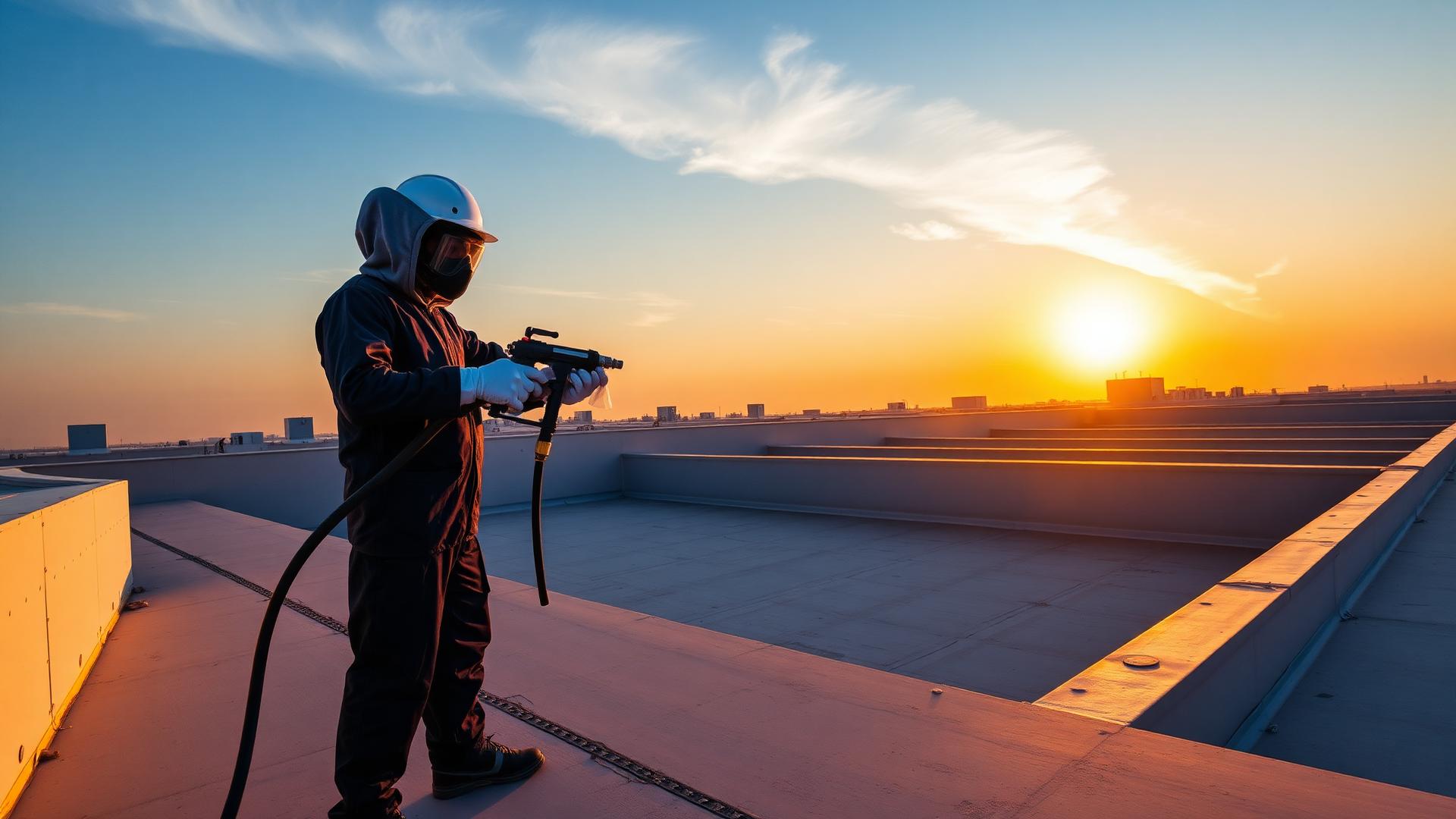
Aliphatic finish on a UAE rooftop
A pure polyurea base coat protected by an aliphatic finish — colour-stable under continuous UV, walkable for maintenance access and seamless from upstand to upstand.
Polyurea against alternative systems
Switch tabs to compare polyurea against the three systems it is most often value-engineered against, plus the internal trade-off between aromatic and aliphatic chemistries.
| Winner | |||
|---|---|---|---|
| Cure / return to service | Walkable in 1 hour | Cool-down 1–4 hours | Polyurea |
| Elongation | 300–450 % | 20–40 % | Polyurea |
| Tensile strength | 16–24 MPa | 0.5–1 MPa | Polyurea |
| UV resistance | Excellent (aliphatic topcoat) | Poor without protection | Polyurea |
| Service life | 25+ years | 8–12 years | Polyurea |
| Crack bridging | Up to 2 mm dynamic | Limited, joint-dependent | Polyurea |
| Waterproofing | Seamless monolithic | Overlap-dependent | Polyurea |
| Chemical resistance | Broad | Limited | Polyurea |
| Abrasion resistance | Very high | Low | Polyurea |
| Flexibility at low temp | Excellent | Brittles below 5 °C | Polyurea |
| Installation speed | 1,000+ m²/day | 200–400 m²/day | Polyurea |
| Maintenance | Spot-repairable | Re-lap required | Polyurea |
| Cost level (first cost) | $$$ | $$ | Bitumen membrane |
- Polyurea
- Walkable in 1 hour
- Bitumen membrane
- Cool-down 1–4 hours
- Polyurea
- 300–450 %
- Bitumen membrane
- 20–40 %
- Polyurea
- 16–24 MPa
- Bitumen membrane
- 0.5–1 MPa
- Polyurea
- Excellent (aliphatic topcoat)
- Bitumen membrane
- Poor without protection
- Polyurea
- 25+ years
- Bitumen membrane
- 8–12 years
- Polyurea
- Up to 2 mm dynamic
- Bitumen membrane
- Limited, joint-dependent
- Polyurea
- Seamless monolithic
- Bitumen membrane
- Overlap-dependent
- Polyurea
- Broad
- Bitumen membrane
- Limited
- Polyurea
- Very high
- Bitumen membrane
- Low
- Polyurea
- Excellent
- Bitumen membrane
- Brittles below 5 °C
- Polyurea
- 1,000+ m²/day
- Bitumen membrane
- 200–400 m²/day
- Polyurea
- Spot-repairable
- Bitumen membrane
- Re-lap required
- Polyurea
- $$$
- Bitumen membrane
- $$
Where polyurea is used
Polyurea spans waterproofing, protective lining and impact-resistance applications. The grid below maps the 13 most common use cases across TEXSA's project portfolio.
Seamless monolithic membrane across exposed roofs, decks and parapets — bridges live cracks and resists ponded water.
View service →High-traffic podium decks under landscaping or hardscape — protected by an aliphatic or PU wear coat.
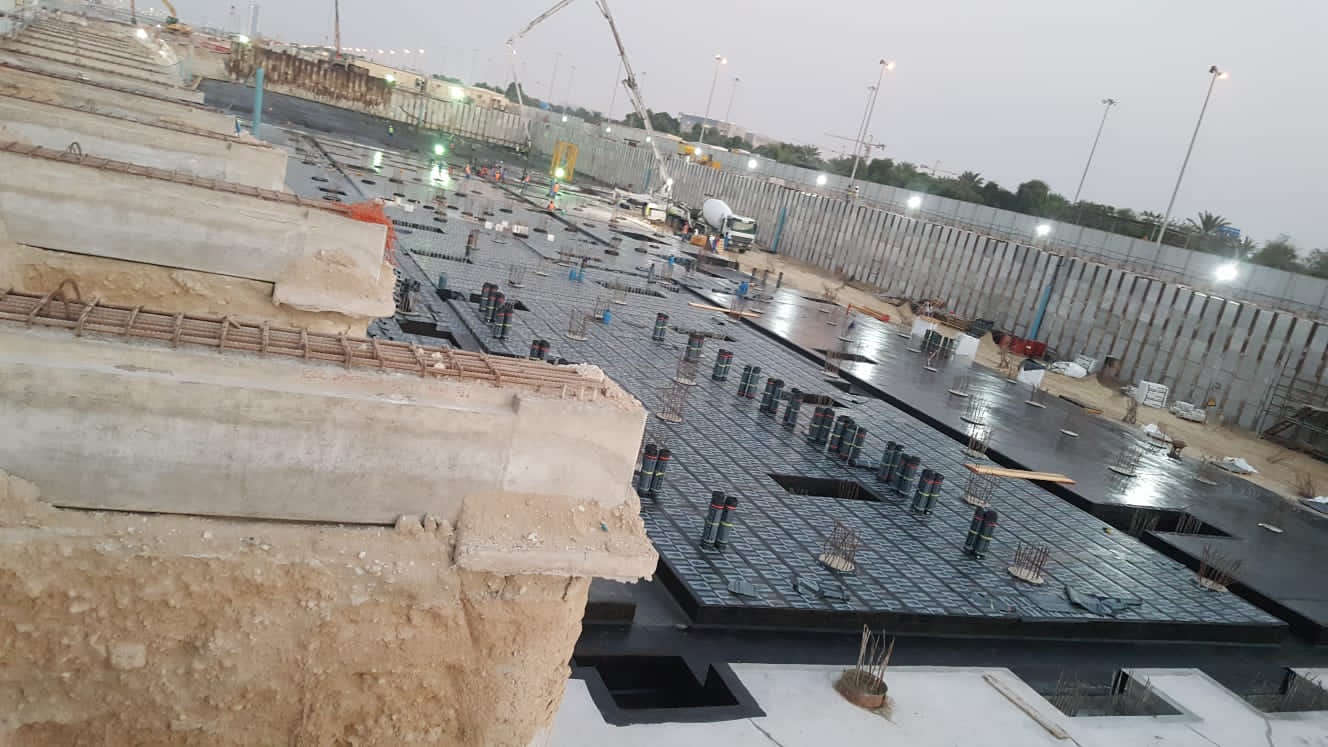
Below-grade tanking, lift pits and retaining walls where positive-side membrane integrity is critical.
WRAS / NSF 61 approved polyurea grades for drinking-water reservoirs and tanks.
View service →Large-area lining of TSE and irrigation reservoirs — installed in days, not weeks.
Polyurea-cement and polyaspartic hybrids for heavy-duty industrial floors.
View service →Bunded areas around oil, chemical and fuel tanks — chemical-resistant and impact-tolerant.
Tank, pit and trench linings exposed to abrasion, chemicals and dynamic loads.
View service →Anti-carbonation, anti-chloride and anti-spalling barriers on concrete infrastructure.
Anti-corrosion lining on pipework, structural steel and offshore assets.
Anti-fragmentation polyurea retrofit on CMU and concrete walls for critical-infrastructure protection.
View service →Abrasion-, impact- and slip-resistant lining for truck beds, skips and industrial equipment.
Bridge decks, tunnel inverts and reservoir refurbishment under tight return-to-service windows.
View service →Polyurea in the UAE climate
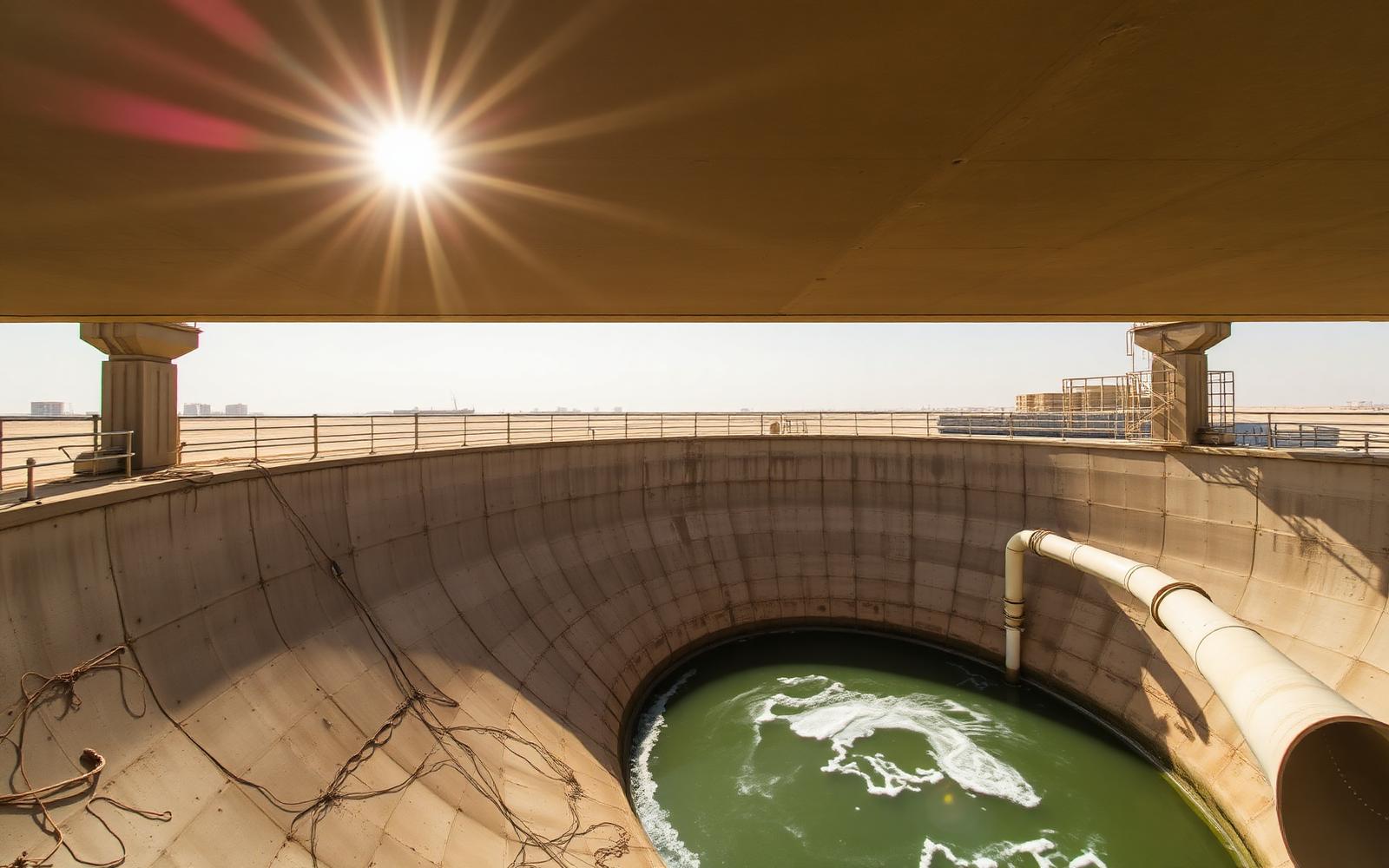
Why the UAE envelope is brutal on coatings
Rooftop surface temperatures peak around 75–80 °C in summer. Coastal humidity, salt-laden air, ponded water from condensation and abrasive sand load the membrane every season — most coating systems were not formulated for this profile.
The UAE imposes a coating envelope that few systems were originally designed for: UV index 10+ for nine months of the year, 50 °C ambient with rooftop surface temperatures above 75 °C, chloride loading from the Arabian Gulf, condensation cycles that produce ponded water on flat roofs, sand abrasion and thermal movement of up to ±20 mm per linear metre per day on exposed concrete.
- UV — aliphatic topcoat protects the aromatic base from chalking; pure polyurea retains mechanical performance regardless.
- Thermal cycling — 300 %+ elongation absorbs daily expansion without splitting at upstands.
- Ponded water — monolithic membrane has no laps to fail; suitable for negative-slope rectification overlays.
- Chloride / salt — closed-cell polyurea is impermeable to chloride and sulphate ion penetration.
- Sand abrasion — abrasion resistance several times higher than bitumen and most PU systems.
Blast mitigation polyurea
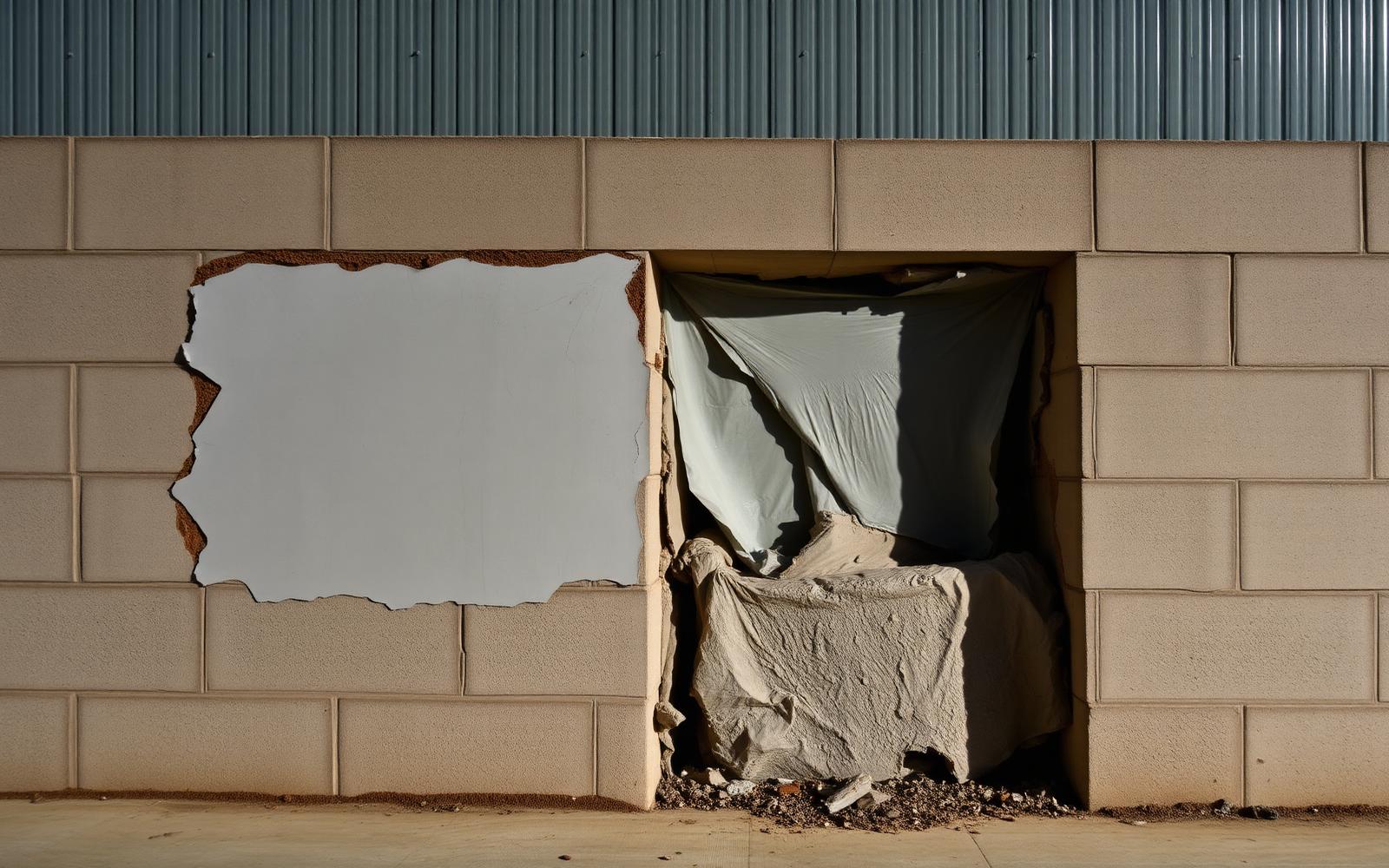
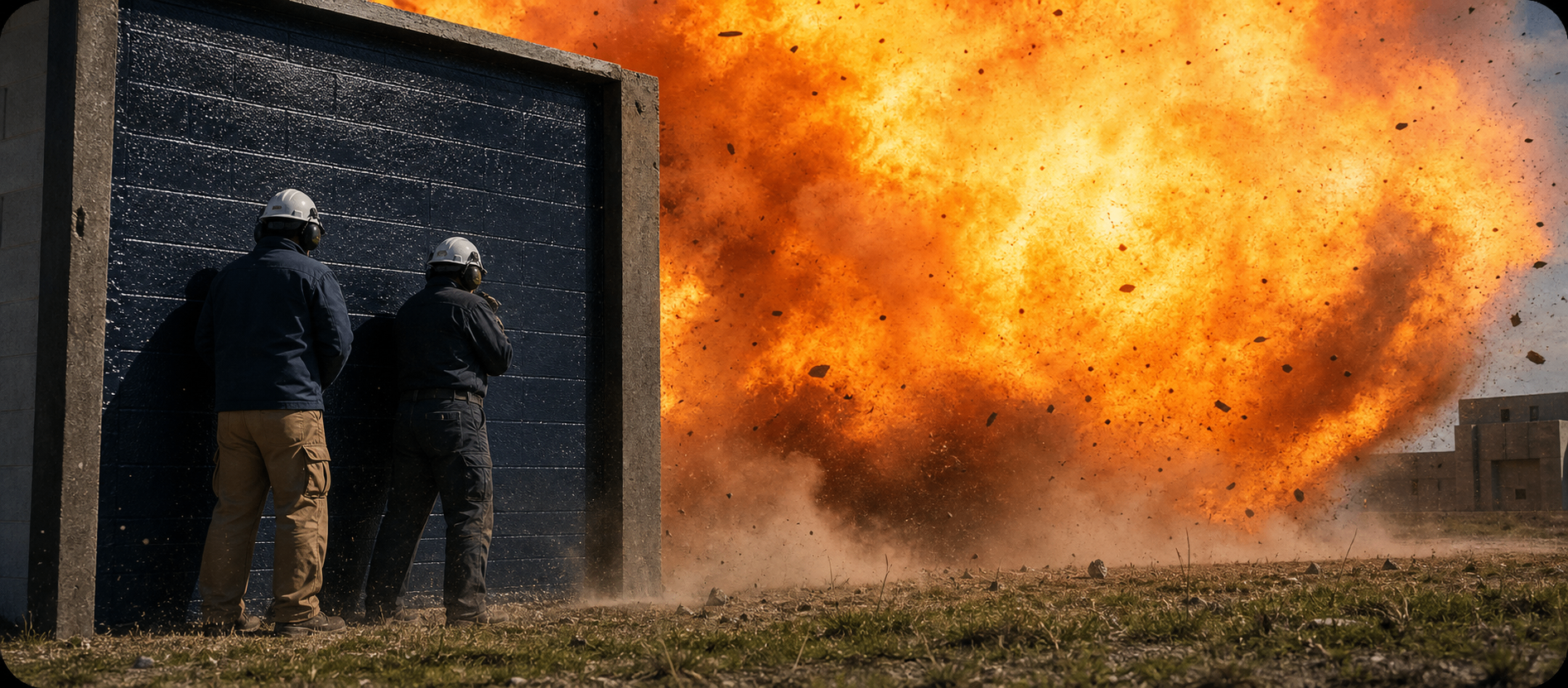
How polyurea mitigates blast
Sprayed at 8–12 mm DFT on the interior face of CMU or concrete walls, polyurea absorbs and redistributes shock energy and contains fragmentation. The substrate fractures; the membrane keeps the fragments in place.
Polyurea blast-mitigation systems are an established retrofit for critical infrastructure — utility buildings, telecom huts, control rooms, embassy and defence facilities, oil-and-gas control rooms and water-treatment plants. The membrane's elasticity dissipates the shock pulse and contains the spall debris that causes most blast injuries.
- Specified at 8–12 mm DFT on the protected face (interior of perimeter walls).
- Used over CMU, RC concrete and steel substrates.
- Validated by arena and field testing against IED and standoff threats.
- Compatible with intumescent and aesthetic finish coats post-spray.
Bed-liner polyurea systems
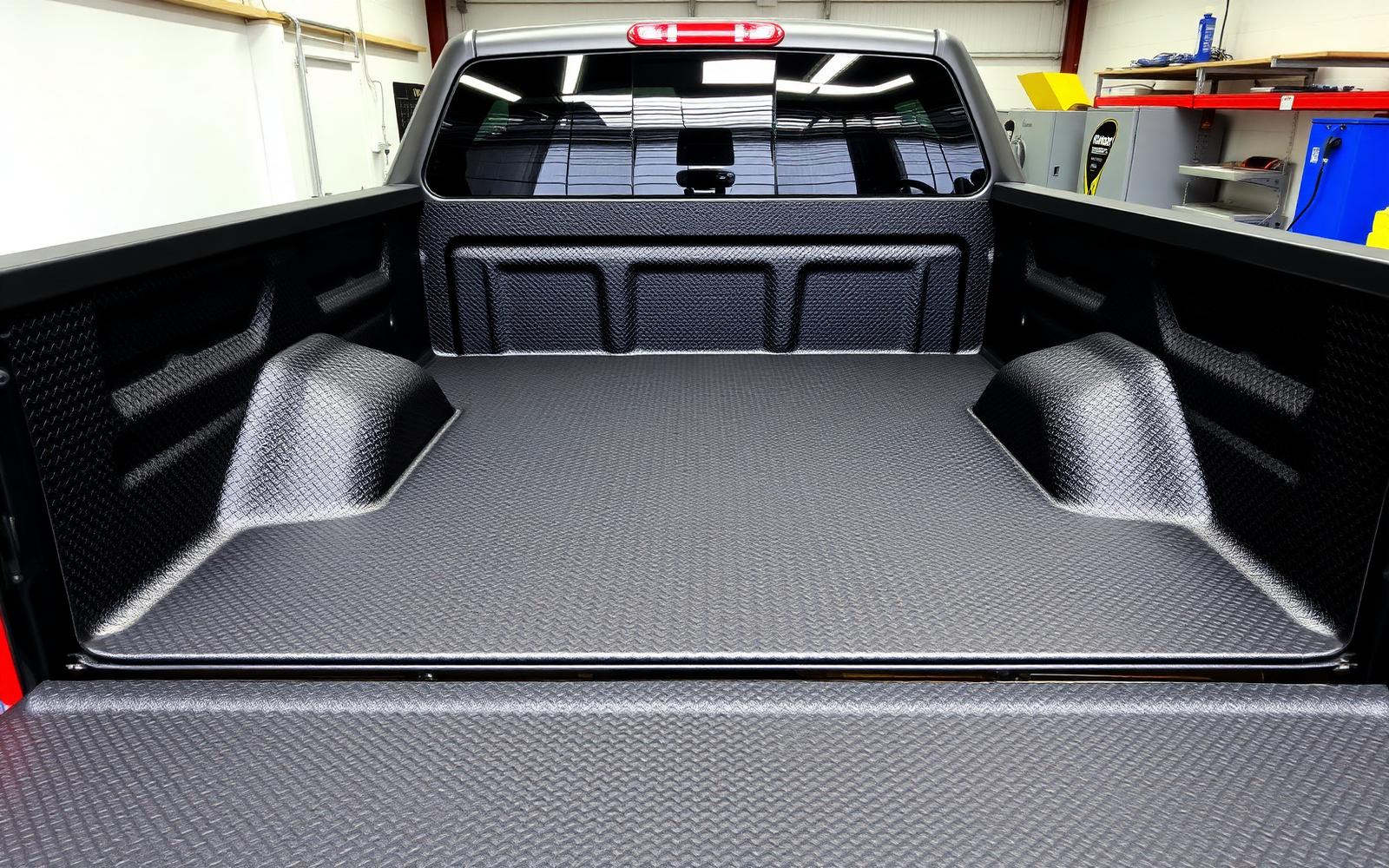
Bed-liner build
A 3–5 mm pure-polyurea bed liner on a textured profile — abrasion-resistant, anti-slip, impact-tolerant and waterproof. Standard on industrial vehicles and waste-handling equipment.
- Abrasion resistance for aggregate, scrap and waste loads.
- Anti-slip texture engineered into the spray pattern.
- Impact resistance protects sheet metal from denting.
- Sealed against corrosion under load.
QA / QC and testing
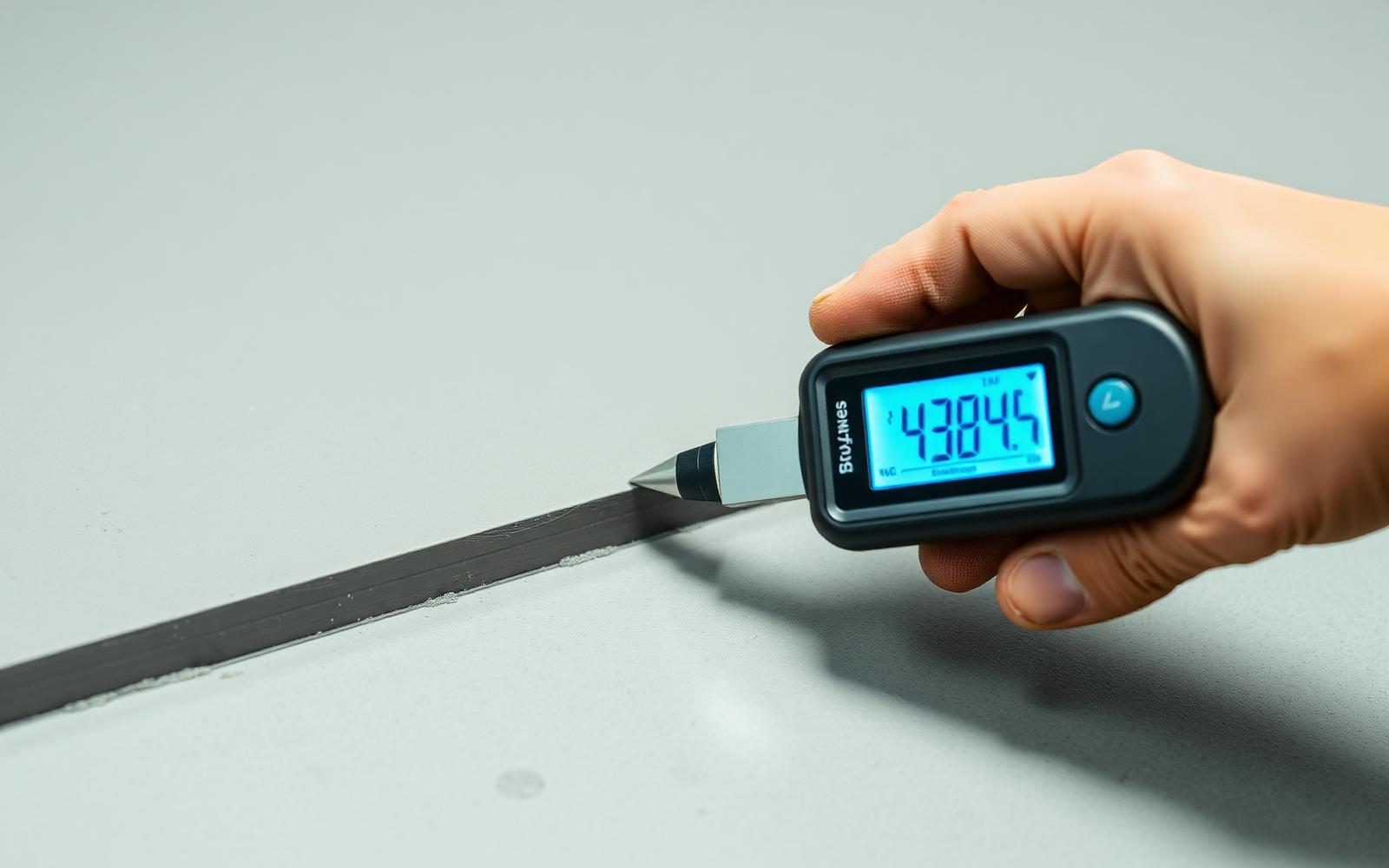
DFT is the headline acceptance metric
Dry-film thickness is sampled per ASTM D6132 at a defined grid density. Spec is typically nominal +20 % / −10 % with no single low reading more than 20 % below nominal.
- DFT — non-destructive (ultrasonic) per ASTM D6132 or destructive per D4138.
- Adhesion — ASTM D4541 pull-off, target ≥ 2.5 MPa or substrate failure.
- Holiday detection — ASTM D5162 high-voltage spark test for pinholes and thin spots.
- Moisture — substrate moisture < 4 % per concrete moisture meter; dew point ≥ 3 °C below substrate.
- Substrate temperature monitored continuously during spray.
- Equipment — material temperature 65–75 °C, dynamic pressure 2,000–2,500 psi, ratio verified hourly.
Surface preparation
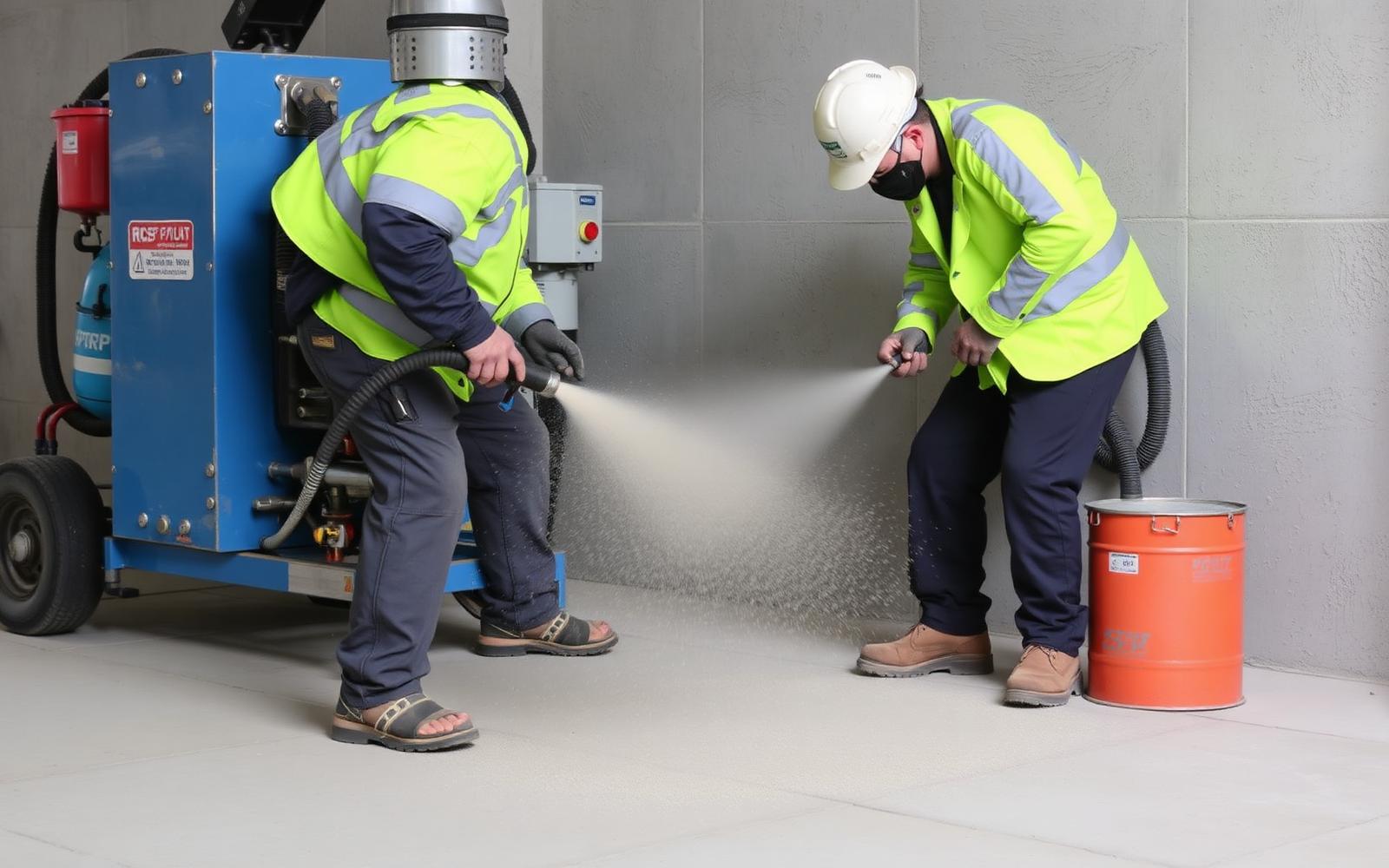
80 % of the project is preparation
Mechanical profiling to ICRI CSP 3–5, full vacuum, primer at 100 % coverage and detailed upstands. Skipping any of these steps is the single most common root cause of polyurea failure.
- 01Shot-blast to ICRI CSP 3–5
Concrete must be sound, dry and at least 28 days old. Power-tools and acid-etching are not equivalents.
- 02Crack repair
Static cracks > 0.3 mm filled with low-viscosity epoxy; live cracks detailed with reinforcement fabric in matched polyurea.
- 03Moisture mitigation
Vapour-barrier primer applied where substrate moisture exceeds 4 % or where ground-borne moisture is suspected.
- 04Priming
Epoxy or polyaspartic primer at 100 % coverage; recoat window strictly observed before polyurea spray.
- 05Detailing
Upstands, drains and penetrations pre-detailed with reinforcement fabric — these are the failure points of every membrane system.
- 06Masking and isolation
Overspray protection on adjacent finishes, M&E and pedestrian routes; access tightly controlled during spray.
Equipment
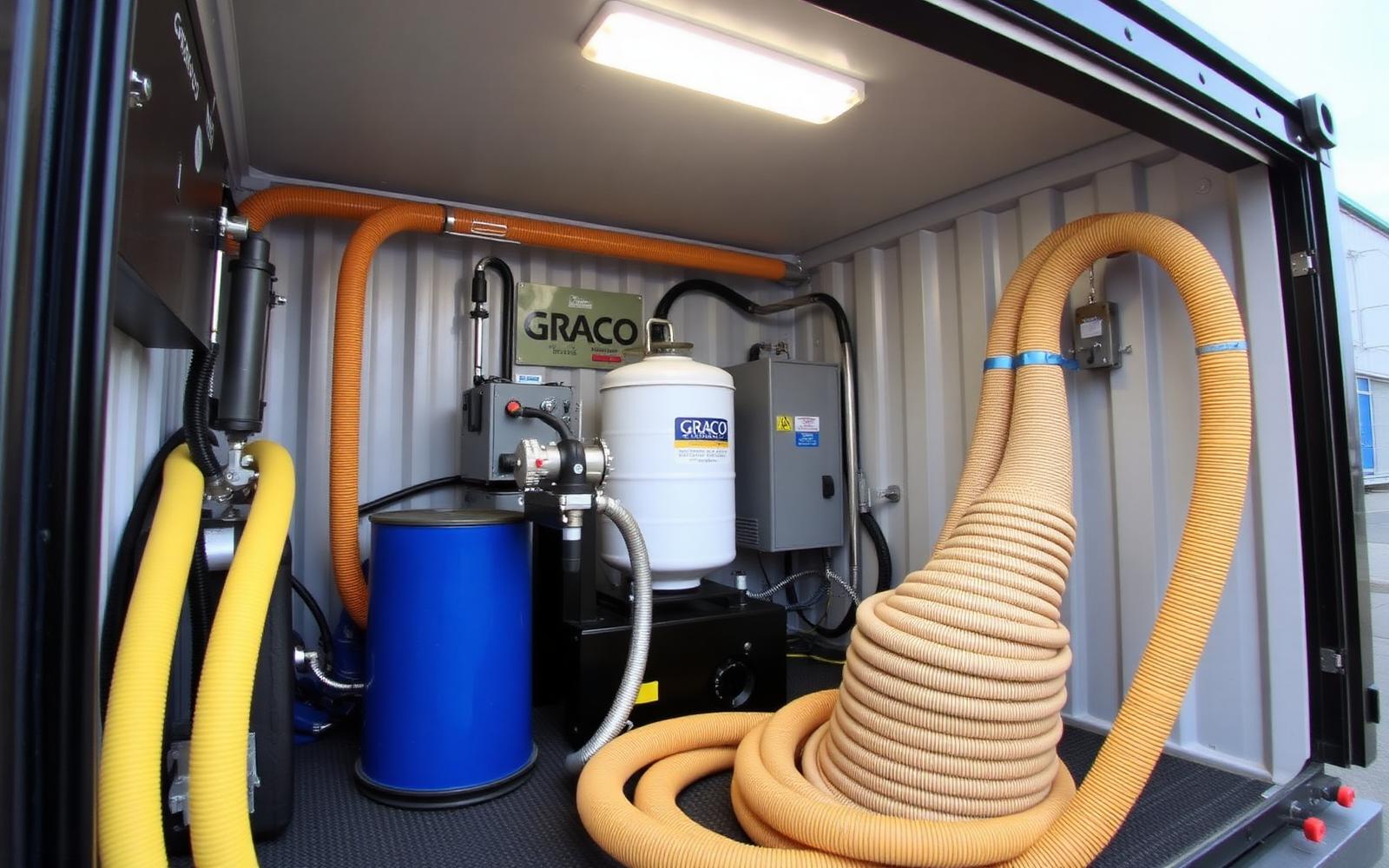
Containerised spray rig
GRACO Reactor 2 E-XP2 or H-XP3 proportioner, heated A- and B-side drums, heated hose to the spray gun. Containerisation lets the rig deploy across the UAE in 48 hours.
- Proportioner — GRACO Reactor 2 E-XP2 / H-XP3 (electric or hydraulic) at 1:1 ratio.
- Material temperature 65–75 °C, dynamic pressure 2,000–2,500 psi.
- Heated hose maintained throughout the run — temperature loss collapses the reaction.
- Impingement-mix spray gun (Fusion AP or PC) with consumables changed per shift.
- Mobile generator and air compressor on the rig for full site independence.
Common polyurea failures
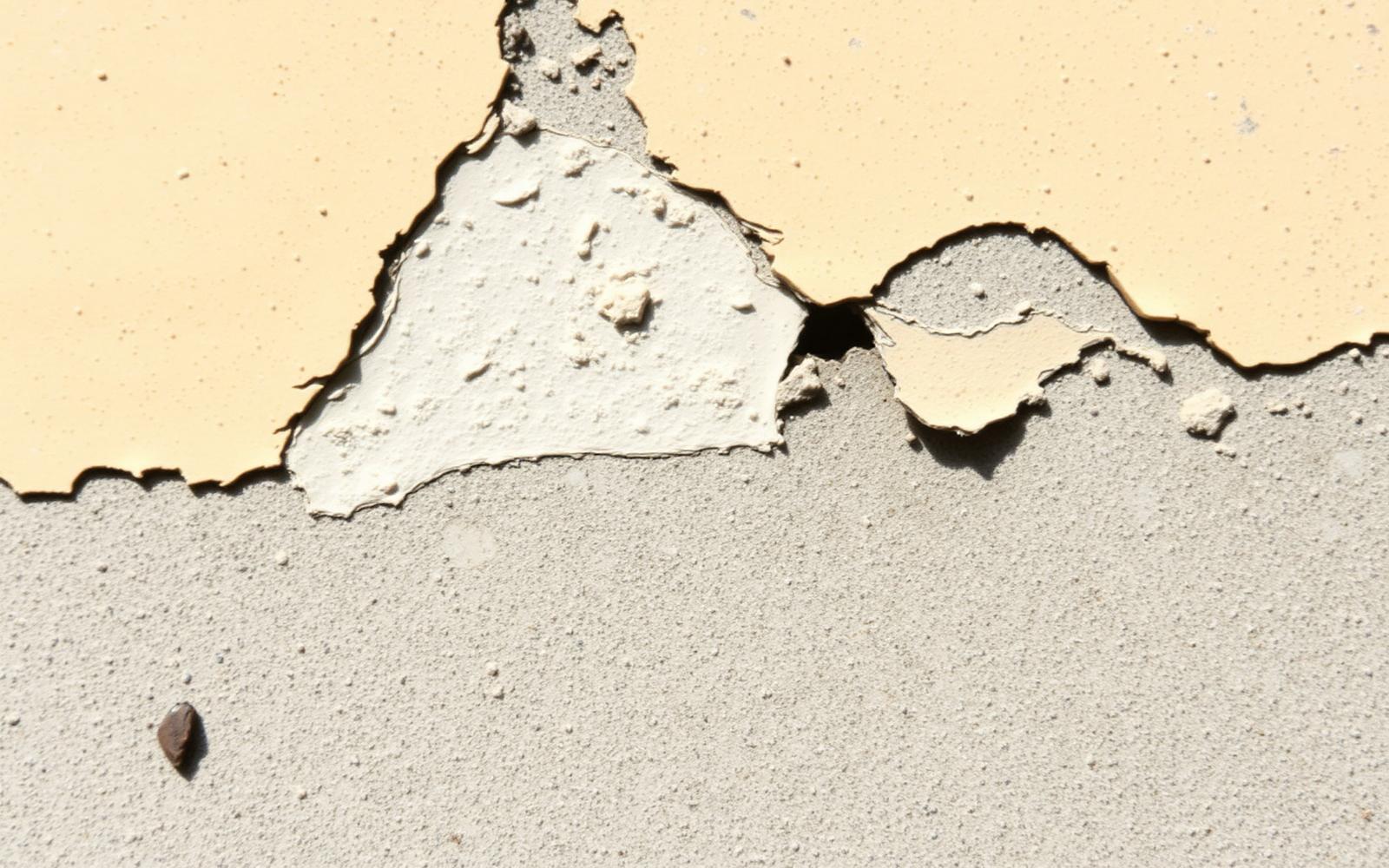
What failure looks like
Every failure mode below is preventable. None of them are caused by the chemistry of polyurea itself — they are caused by what surrounds it.
- Inadequate surface preparation — power-tooled or acid-etched concrete instead of shot-blast.
- Substrate moisture or vapour drive — outgassing during spray produces pinholes and blisters.
- Poor detailing at upstands, drains and penetrations.
- Off-spec chemistry — sourcing material outside the published TDS envelope.
- Spray parameters drift — temperature loss or ratio drift produces under-cured or brittle film.
- UV chalking — aromatic system left unprotected on exposed surface (cosmetic only, but a specification miss).
Recommended TEXSA / PolyTex systems
TEXSA specifies a tiered family of polyurea systems matched to application risk. The four families below cover 95 % of project requirements; the technical team will narrow specification on a project basis.
- TEXSA Pure Polyurea — Roof / Tank Grade. Pure polyurea for waterproofing of roofs, podium decks, reservoirs and process tanks. 25-year design life.
- TEXSA Aliphatic Topcoat. UV-stable colour-retentive finish coat over pure polyurea on exposed surfaces.
- TEXSA Ballistic Polyurea. High-DFT pure polyurea for blast-mitigation and impact-resistant lining of critical-infrastructure walls.
- TEXSA Industrial Polyurea. Hybrid and polyurea-cement systems for industrial flooring, secondary containment and abrasion-resistant linings.
Choosing the right system for your project
The right polyurea specification is the one that matches the asset's geometry, exposure, downtime cost and design life — not the one with the lowest unit rate. Pure polyurea will outlive most of the structures it protects when applied correctly. Hybrid, aromatic and aliphatic systems each have a defensible place when their trade-offs match the brief. Talk to TEXSA's polyurea team before the value-engineering meeting, not after it.
TEXSA's polyurea specialists deliver pure, hybrid, aromatic and aliphatic polyurea systems across the UAE — from podium decks and reservoirs to defence-grade blast linings.