On this page
Two large families of pure polyurea are used in protective coating works: aromatic and aliphatic. They share the same underlying chemistry — a fast reaction between isocyanate and amine — but differ in the type of isocyanate used. That single difference drives the most important performance distinction on exposed surfaces: long-term colour and UV stability.
What the labels actually mean
Aromatic polyurea uses MDI-based isocyanates, where the reactive group sits on an aromatic ring. Aliphatic polyurea uses HDI- or IPDI-based isocyanates with no aromatic ring. The aromatic ring is responsible for the chalking and yellowing that occurs when aromatic polyurea is left exposed to UV.
Side-by-side comparison
- Aromatic Polyurea
- MDI
- Aliphatic Polyurea
- HDI / IPDI
- Aromatic Polyurea
- Chalks and yellows
- Aliphatic Polyurea
- Long-term colour stable
- Aromatic Polyurea
- Excellent
- Aliphatic Polyurea
- Excellent
- Aromatic Polyurea
- Lower
- Aliphatic Polyurea
- Significantly higher (often 2–3×)
- Aromatic Polyurea
- Waterproofing membrane (below a topcoat or screed)
- Aliphatic Polyurea
- UV-exposed finish, decorative, traffic deck topcoats
- Aromatic Polyurea
- 1.5–3.0 mm typical
- Aliphatic Polyurea
- 200–500 µm typical (as topcoat)
- Aromatic Polyurea
- Hours
- Aliphatic Polyurea
- Hours
Specifying the right combination
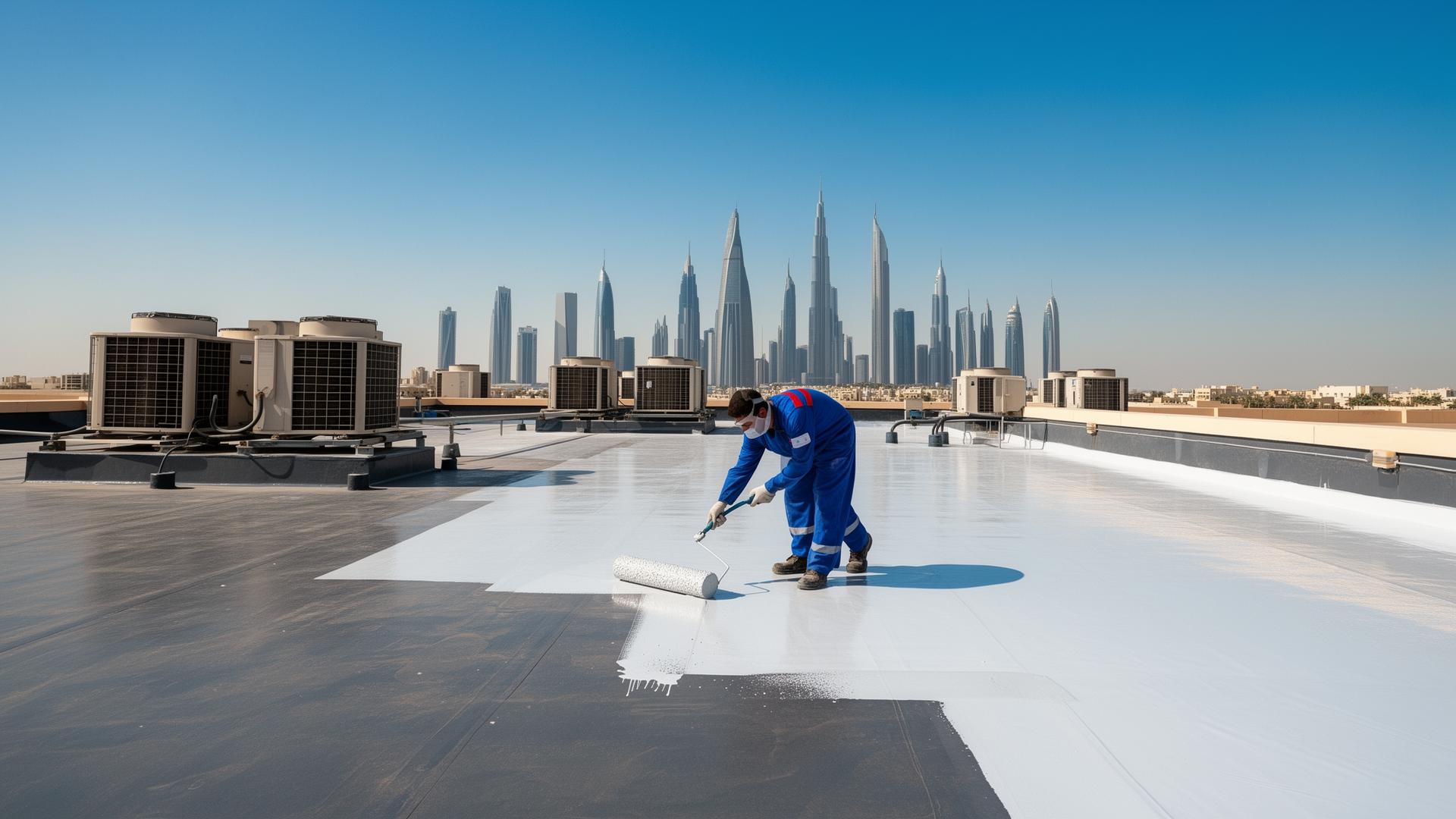
On UV-exposed roofs, balconies, parking decks, and external tanks, the correct specification is almost always an aromatic polyurea waterproofing membrane finished with an aliphatic polyurea or polyaspartic topcoat. The aromatic layer carries the mechanical performance and waterproofing function; the aliphatic layer carries the colour, gloss, and aesthetic stability.
On buried, screeded, or otherwise UV-shielded surfaces, aromatic polyurea alone is sufficient and is the economical choice. Specifying aliphatic polyurea on a fully buried tank is a common over-specification that adds cost without performance benefit.