On this page
Tank lining decisions in the UAE almost always come down to two technologies: glass-reinforced plastic (GRP) and pure polyurea. They look similar from a distance — both are bonded, in-situ liners protecting concrete or steel from the contents inside. In service, however, they behave like two completely different materials. This guide compares them side by side: chemistry, installation, mechanical behaviour, failure modes, lifespan, repairability and what to specify on which asset.
What is GRP lining?
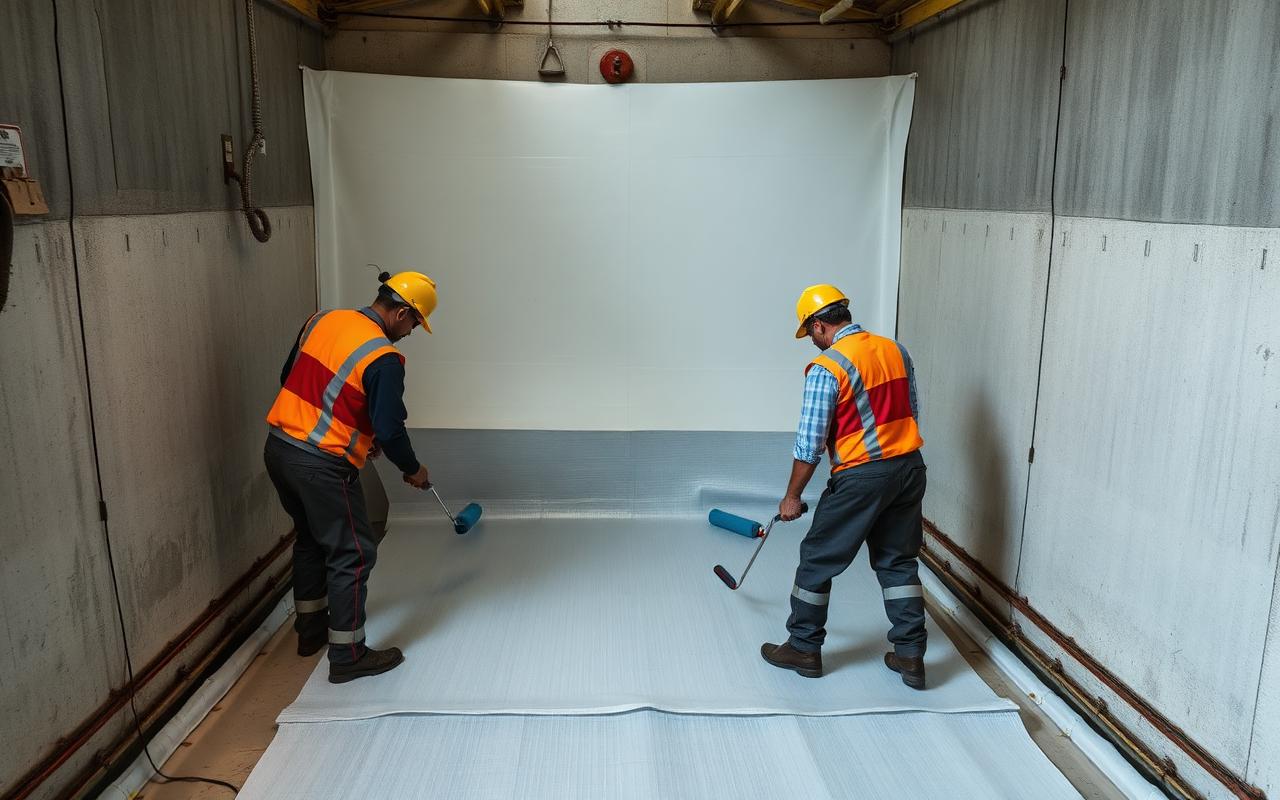
Glass-reinforced plastic — also called fibreglass lining or FRP — is a hand-laid composite. Layers of woven or chopped-strand glass mat are saturated with a thermoset resin (most commonly isophthalic polyester, vinyl ester or epoxy) and consolidated with rollers, panel by panel, against the substrate. The cured laminate is rigid, hard and chemically resistant. Total thickness is typically 2–6 mm built up in 2–4 plies, with every panel overlapping its neighbour by 50–100 mm.
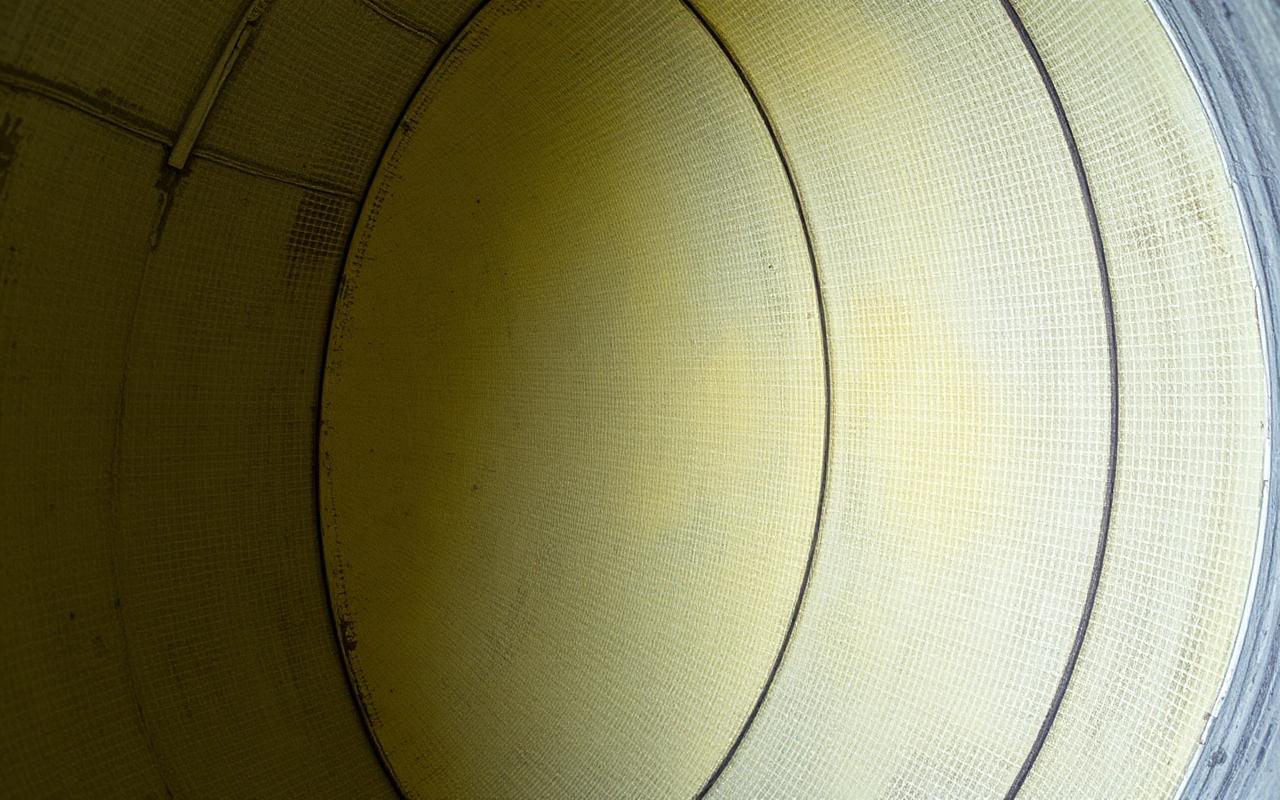
GRP is a layered composite
The woven glass texture and the overlap seam between panels are both visible in the cured laminate. Every overlap is a planned weak point — bond integrity at that interface dictates the life of the entire lining.
Where GRP fits today
GRP grew out of the marine and chemical-tank industries in the 1960s. It is still the default specification on many older drawings — partly because it is well understood, partly because the inputs (resin, mat, catalyst) are commodity items available anywhere. Application is labour-intensive but does not require specialised plant, which keeps mobilisation cost low on small jobs.
What is polyurea lining?
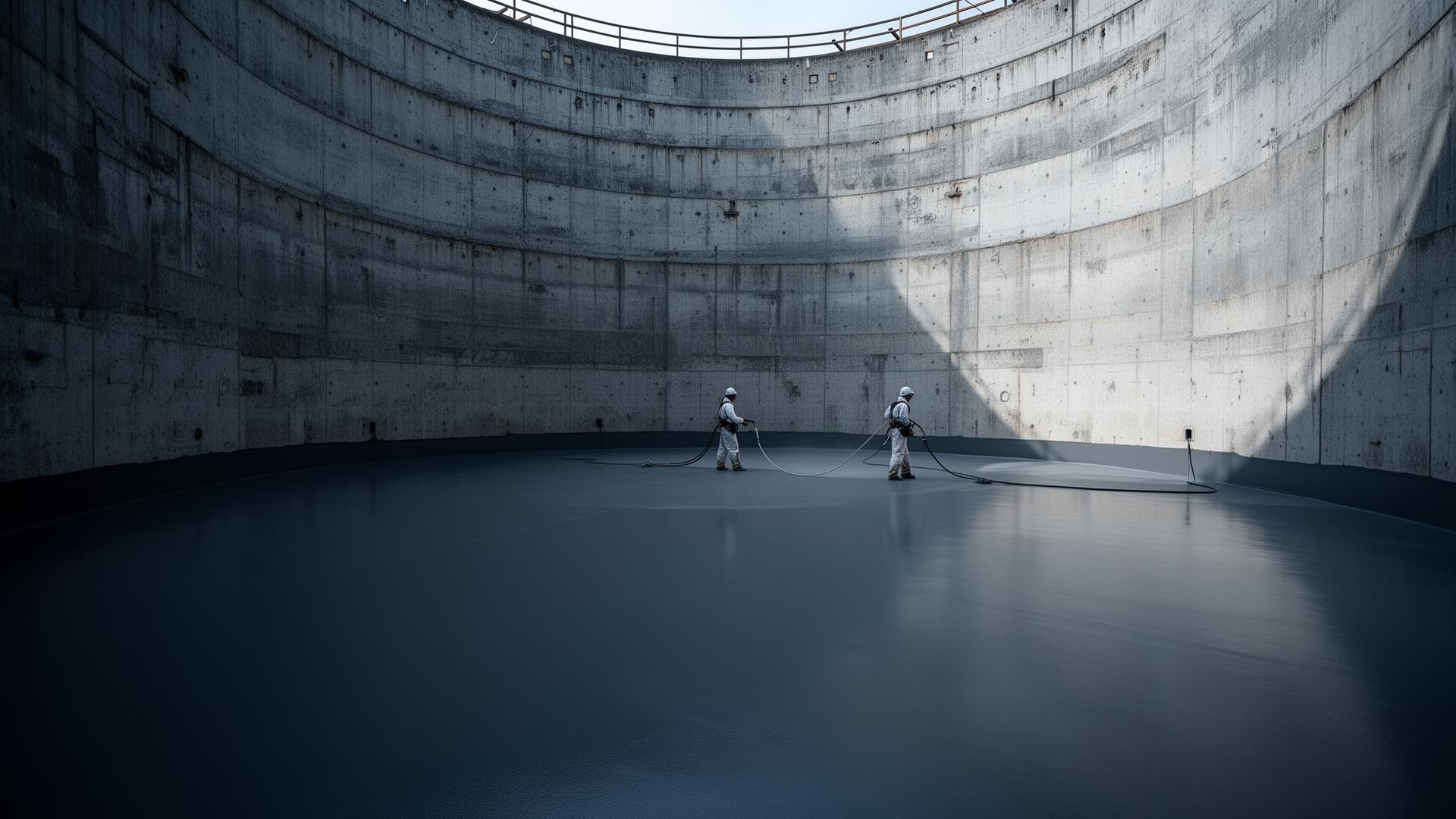
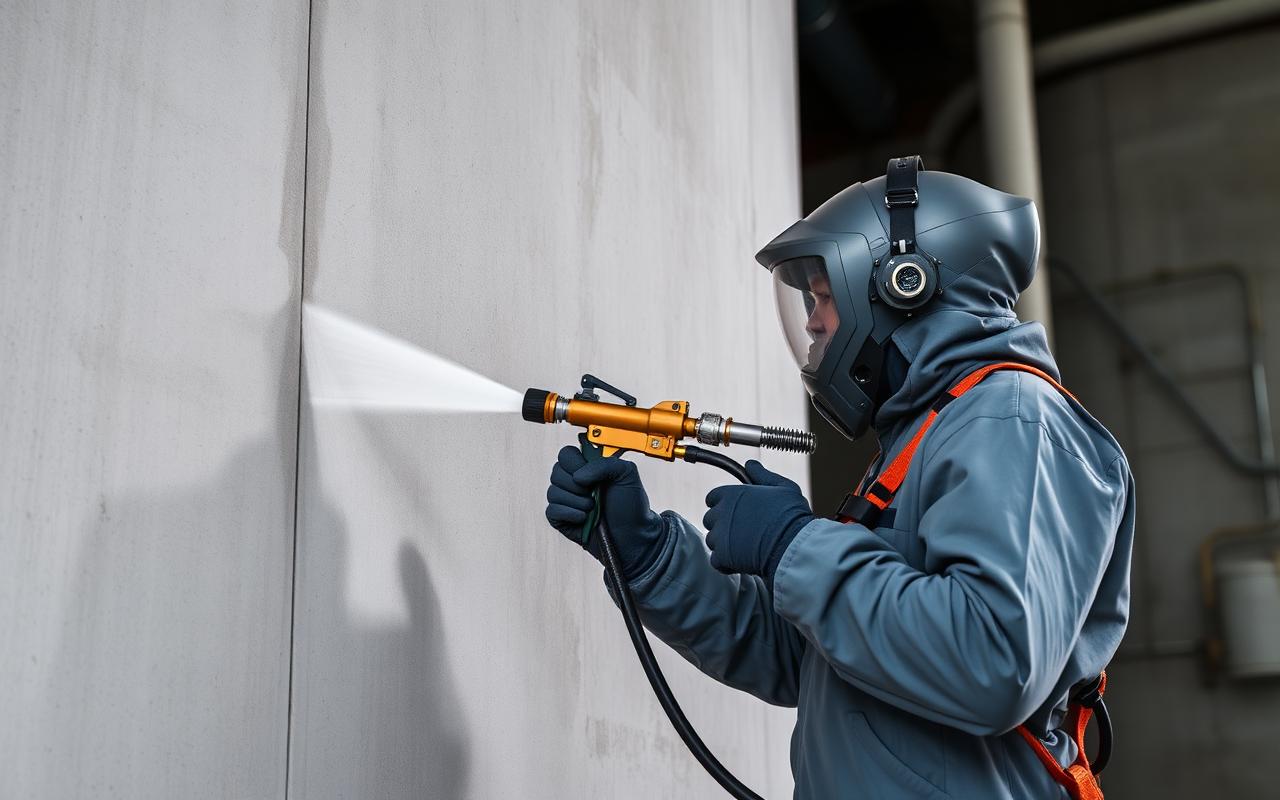
Pure polyurea is a 1:1 plural-component elastomer formed by reacting an isocyanate with an amine-terminated resin. The two components are pumped through a heated GRACO Reactor-style rig at ~70 °C and 2,000 psi, mixed at the spray gun, and atomised onto the substrate. The reaction is so fast that the film gels in 3–6 seconds and is tack-free in under 15. A 2 mm seamless membrane can be built in a single continuous pass.

Polyurea is a monolithic elastomer
No reinforcement, no panels, no overlaps. The film is a single continuous elastomer with very high elongation — it stretches with the substrate rather than cracking against it.
Head-to-head comparison
- GRP Lining
- Hand-laid laminate (glass + resin)
- Pure Polyurea Lining
- Hot-sprayed plural-component elastomer
- GRP Lining
- Manual hand layup, panel by panel
- Pure Polyurea Lining
- GRACO Reactor at 70 °C / 2,000 psi
- GRP Lining
- Glass mat (woven / CSM)
- Pure Polyurea Lining
- None — film is self-supporting
- GRP Lining
- 2.0 – 6.0 mm in 2–4 plies
- Pure Polyurea Lining
- 1.5 – 3.0 mm in a single pass
- GRP Lining
- Overlap every panel (50–100 mm)
- Pure Polyurea Lining
- Seamless, fully monolithic
- GRP Lining
- 7–14 days for full cure
- Pure Polyurea Lining
- 24–48 hours
- GRP Lining
- 1–3 % (rigid laminate)
- Pure Polyurea Lining
- 300–450 %
- GRP Lining
- None — cracks telegraph through
- Pure Polyurea Lining
- Bridges dynamic cracks
- GRP Lining
- Mechanical + chemical to primer
- Pure Polyurea Lining
- Chemical bond to primer ≥ 2.0 MPa
- GRP Lining
- High (vinyl ester / epoxy)
- Pure Polyurea Lining
- High (formulation dependent)
- GRP Lining
- Good but brittle on impact
- Pure Polyurea Lining
- Excellent, energy-absorbing
- GRP Lining
- −20 °C to +80 °C
- Pure Polyurea Lining
- −40 °C to +120 °C
- GRP Lining
- Surface chalking, fibre bloom
- Pure Polyurea Lining
- Chalks unless aliphatic topcoat
- GRP Lining
- Grind back panel, re-laminate
- Pure Polyurea Lining
- Local sand + spray — invisible repair
- GRP Lining
- 10–15 years
- Pure Polyurea Lining
- 25+ years
- GRP Lining
- High — long cure window
- Pure Polyurea Lining
- Low — same-shift return
- GRP Lining
- $ – $$
- Pure Polyurea Lining
- $$ – $$$
- GRP Lining
- Small static chemical tanks, GRP fittings
- Pure Polyurea Lining
- Reservoirs, pits, secondary containment, dynamic tanks
Same project, two systems
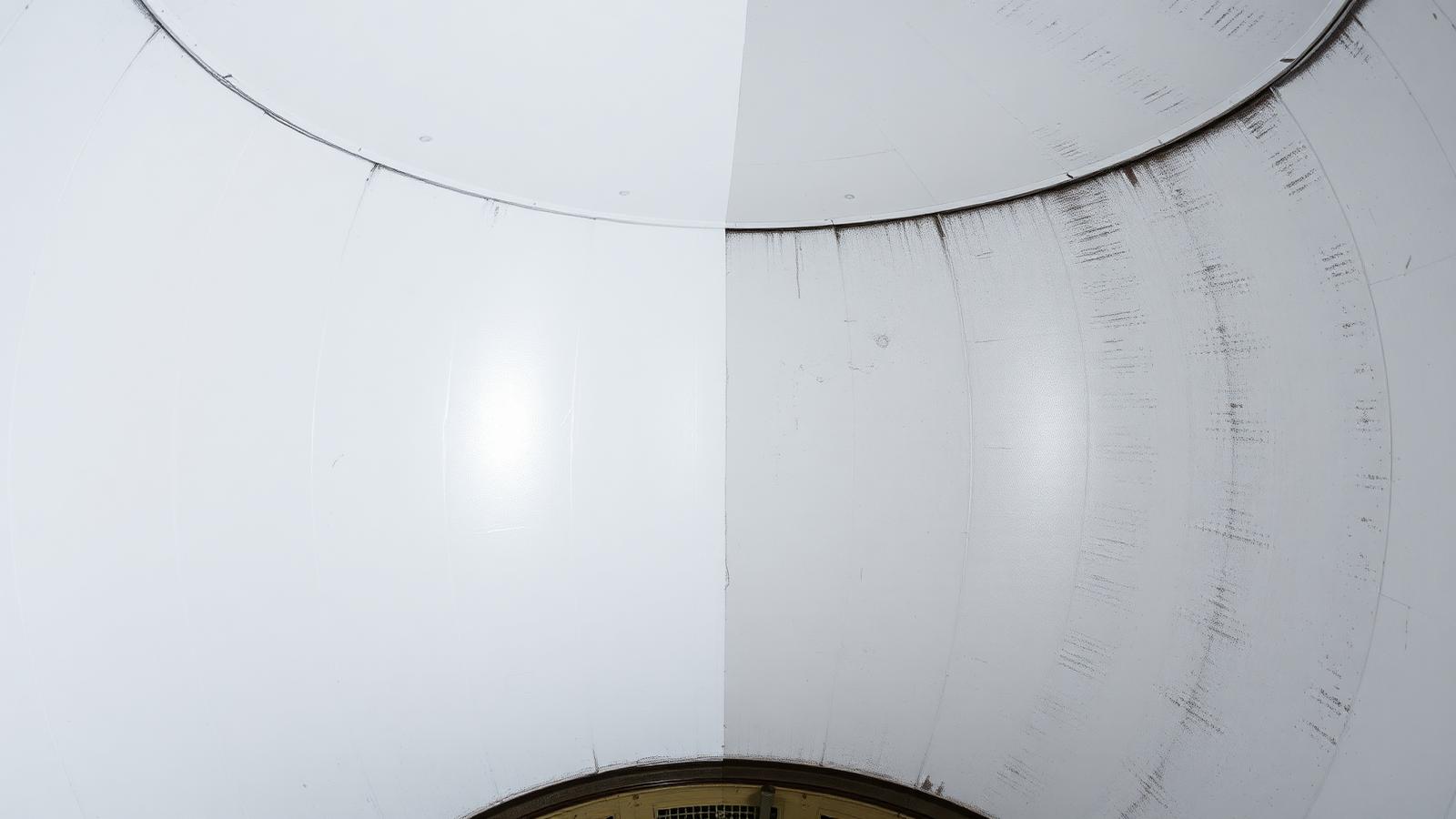
The clearest way to understand the difference is to look at the same tank lined two ways. Below is a side-by-side view of an identical rectangular concrete tank: one half restored with GRP, the other with sprayed polyurea. Look at the joint geometry, the surface continuity at corners, and how each system terminates at the top edge.
Identical tank — two lining systems
Photographed from the same angle, in the same lighting, after handover. Notice the panel grid and overlap reinforcement on the GRP side, and the continuous monolithic finish on the polyurea side.
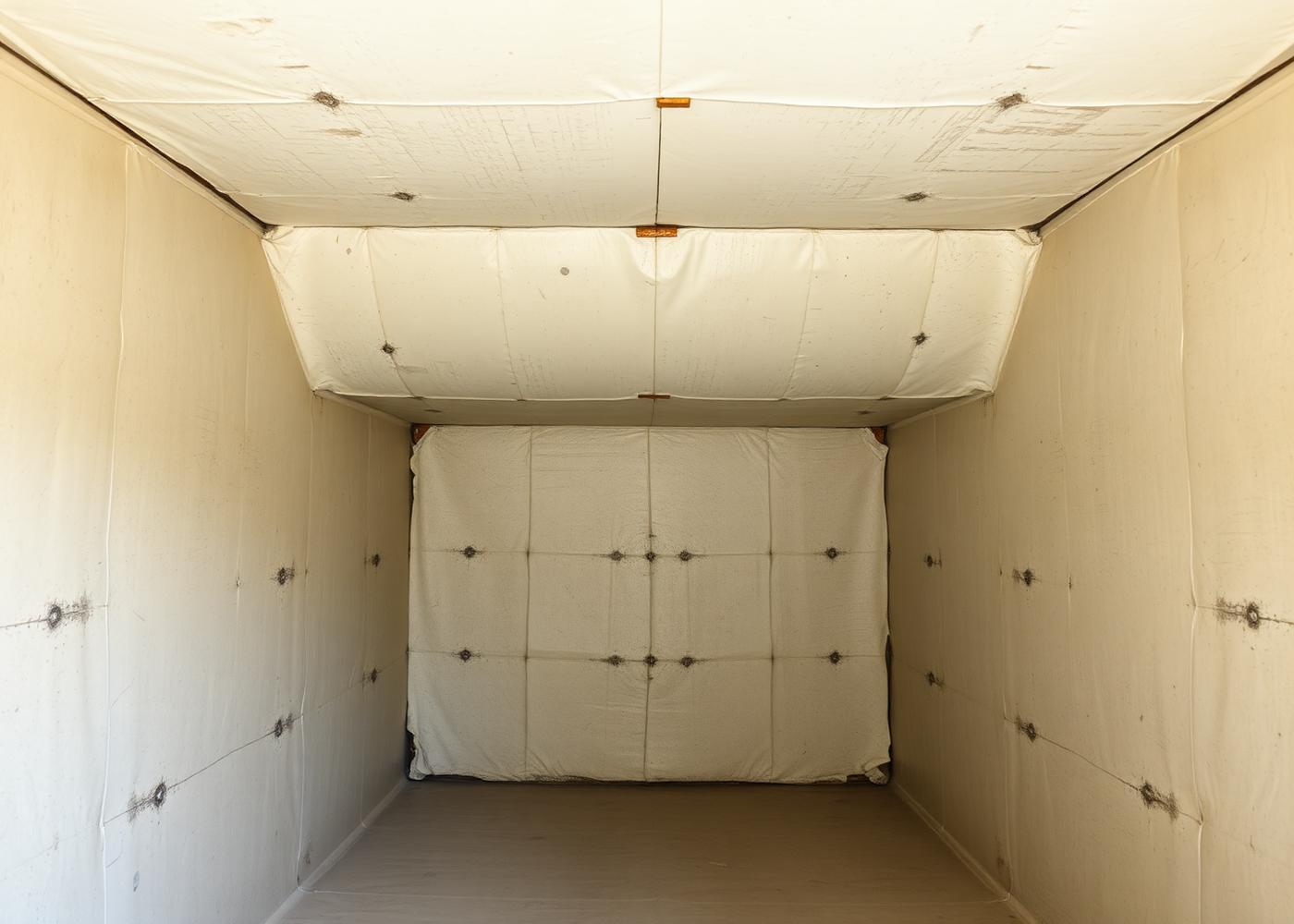
Hand-laid GRP, 4 mm in 3 plies. Panel overlaps visible at every joint.
- Visible overlap seams every ~1.0 m
- Rigid laminate — no give if the substrate cracks
- Corner detailing built up locally with extra plies
Hot-spray pure polyurea, 2 mm in a single pass. Fully seamless from floor to top edge.
- Zero seams, zero overlaps — monolithic membrane
- 300–450 % elongation absorbs substrate movement
- Corners and penetrations encapsulated in the same pass
Where each system wins
GRP is the right call when…
- The tank is small, static, and the contents are aggressive chemicals where vinyl ester or novolac epoxy chemistry is specifically required.
- Site access prevents bringing in a plural-component spray rig (no power, no compressed air, restricted hot-work).
- The asset is short-life or temporary and 10–12 year service is acceptable.
- Existing GRP fittings, nozzles or pipework need a chemistry-matched local repair.
Polyurea is the right call when…
- The asset matters — potable water reservoirs, firewater tanks, sewage pits, secondary containment, balancing tanks.
- Downtime is expensive — every extra day of shutdown costs more than the lining itself.
- The substrate moves — thermal cycling, settlement, dynamic loading, fill/empty cycles.
- The geometry is complex — multiple penetrations, upstands, corners, transitions that GRP would struggle to detail cleanly.
- Long-term lifecycle cost is the primary metric, not lowest first cost.
Failure modes we see on site
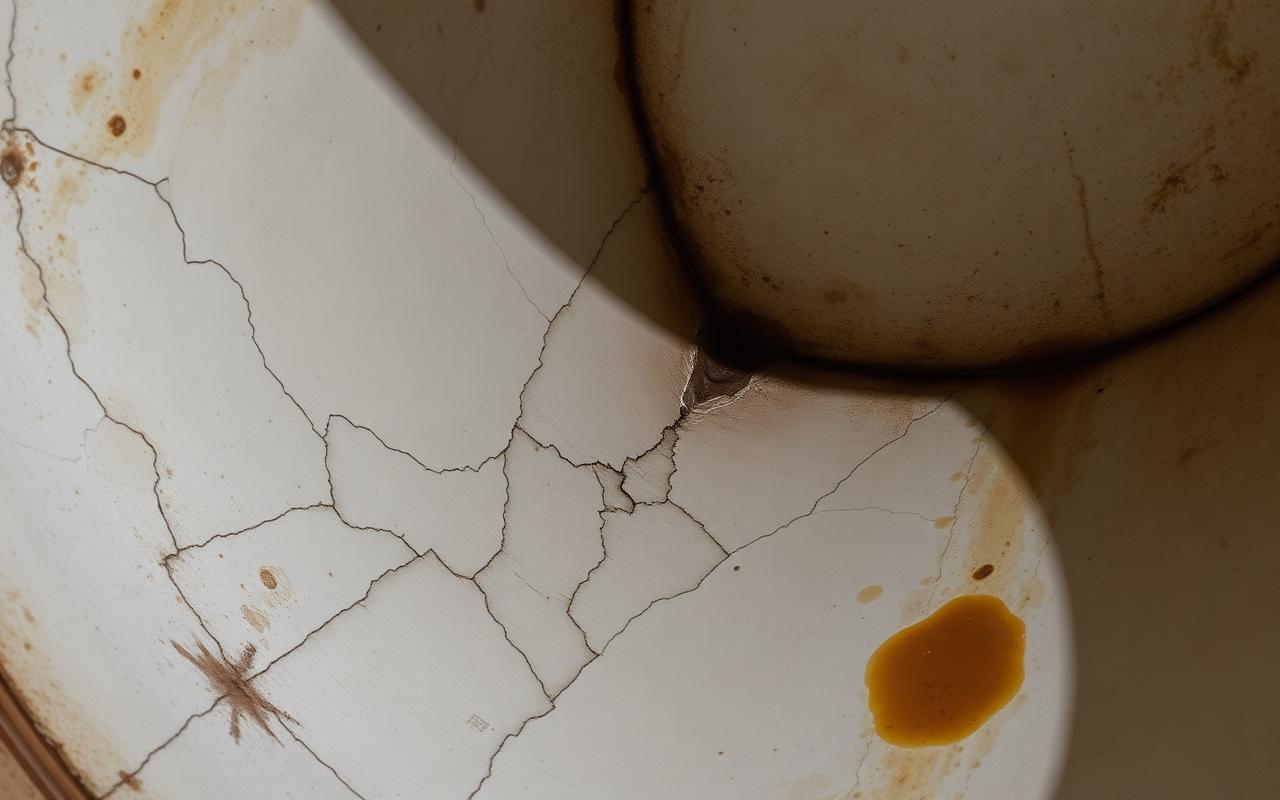
Classic GRP failure pattern
Cracked laminate at a corner, water staining tracking down from a delaminated edge, and an osmotic blister bleeding contaminant. Once a GRP lining starts to fail, the failure propagates along the overlap network.
GRP — what tends to fail
- Edge delamination at panel overlaps as the adhesive bond weakens over time.
- Osmotic blistering when water vapour permeates the laminate and pressurises voids.
- Brittle cracking at corners and re-entrant angles under thermal or settlement movement.
- Fibre bloom and surface chalking on UV-exposed laminate.
- Impact damage — dropped tools puncture the rigid laminate cleanly.
Polyurea — what tends to fail
- Pinholes from inadequate primer or moisture trapped in the concrete substrate.
- Adhesion loss when surface preparation skips the ICRI CSP 3–5 profile requirement.
- UV chalking on aromatic polyurea left exposed without an aliphatic or polyaspartic topcoat.
- Solvent attack when an out-of-spec chemistry is used against an unverified content list.
How TEXSA applies each system
GRP application sequence
- 01Surface prep
Grinding or light shot-blast to remove laitance; concrete must be dry, sound and at least 28 days old.
- 02Primer
Vinyl ester or epoxy primer compatible with the resin chemistry, brush- or roller-applied.
- 03Lay-up
Glass mat positioned panel by panel, saturated with resin, consolidated with serrated rollers to remove air voids.
- 04Build-up
2–4 plies to design thickness with full overlap at every joint; topcoat resin applied to seal the surface.
- 05Cure & test
7–14 day cure depending on resin; holiday/spark test at acceptance to detect pinholes.
Polyurea application sequence
- 01Diagnose & prep
Moisture mapping; shot-blast to ICRI CSP 3–5; vacuum and inspect under light.
- 02Primer
Epoxy primer at 100 % coverage; outgassing control on porous concrete.
- 03Detail
Upstands, drains and penetrations pre-detailed with reinforcement fabric in matched polyurea.
- 04Spray
Single-pass plural-component spray to 1.5–2.5 mm WFT, continuously monitored.
- 05Test & hand-over
DFT verification, ASTM D4541 pull-off, holiday detection and flood test before reinstatement.
Site gallery
Choosing the right system
GRP and polyurea are not interchangeable. GRP is a rigid composite that excels on small, static, chemistry-specific tanks where the lining can be replaced on a 10-year cycle. Polyurea is an elastomeric monolithic membrane that excels on infrastructure assets where downtime, seamless geometry and 25-year-plus performance drive the business case. The most expensive lining is the one that fails — so specify against the asset, not against the bid sheet.
Hands-on experience lining potable, firewater, sewage and chemical tanks across the UAE with both GRP and polyurea systems.