On this page
Cementitious waterproofing and liquid-applied polyurethane (PU) membranes are both widely used on internal wet areas, planters, podiums, and roofs. They behave very differently in service, and the wrong choice on a substrate with movement will lead to early cracking and leaks.
How each system works
Cementitious systems are powder-and-liquid blends — typically a polymer-modified cement matrix — that cure into a rigid, mineral-bonded coating. They bond chemically to concrete and are vapour permeable, allowing the substrate to breathe. Liquid PU membranes are single- or two-component polyurethane that cure into an elastomeric film with significant elongation. They form a continuous, flexible membrane that bridges hairline cracks.
Side-by-side comparison
Nature of cured film
- Cementitious
- Rigid, mineral
- Liquid Polyurethane
- Elastomeric, polymeric
Elongation
- Cementitious
- Negligible (1–10% flexible variants)
- Liquid Polyurethane
- 200–400%
Crack-bridging
- Cementitious
- No (hairline only with fibre-reinforced variants)
- Liquid Polyurethane
- Yes
Vapour permeability
- Cementitious
- Breathable
- Liquid Polyurethane
- Effectively vapour-tight
Negative-side application
- Cementitious
- Yes — withstands hydrostatic pressure from rear
- Liquid Polyurethane
- No — debonds under negative pressure
UV resistance
- Cementitious
- Excellent
- Liquid Polyurethane
- Limited; requires UV-stable topcoat
Typical applications
- Cementitious
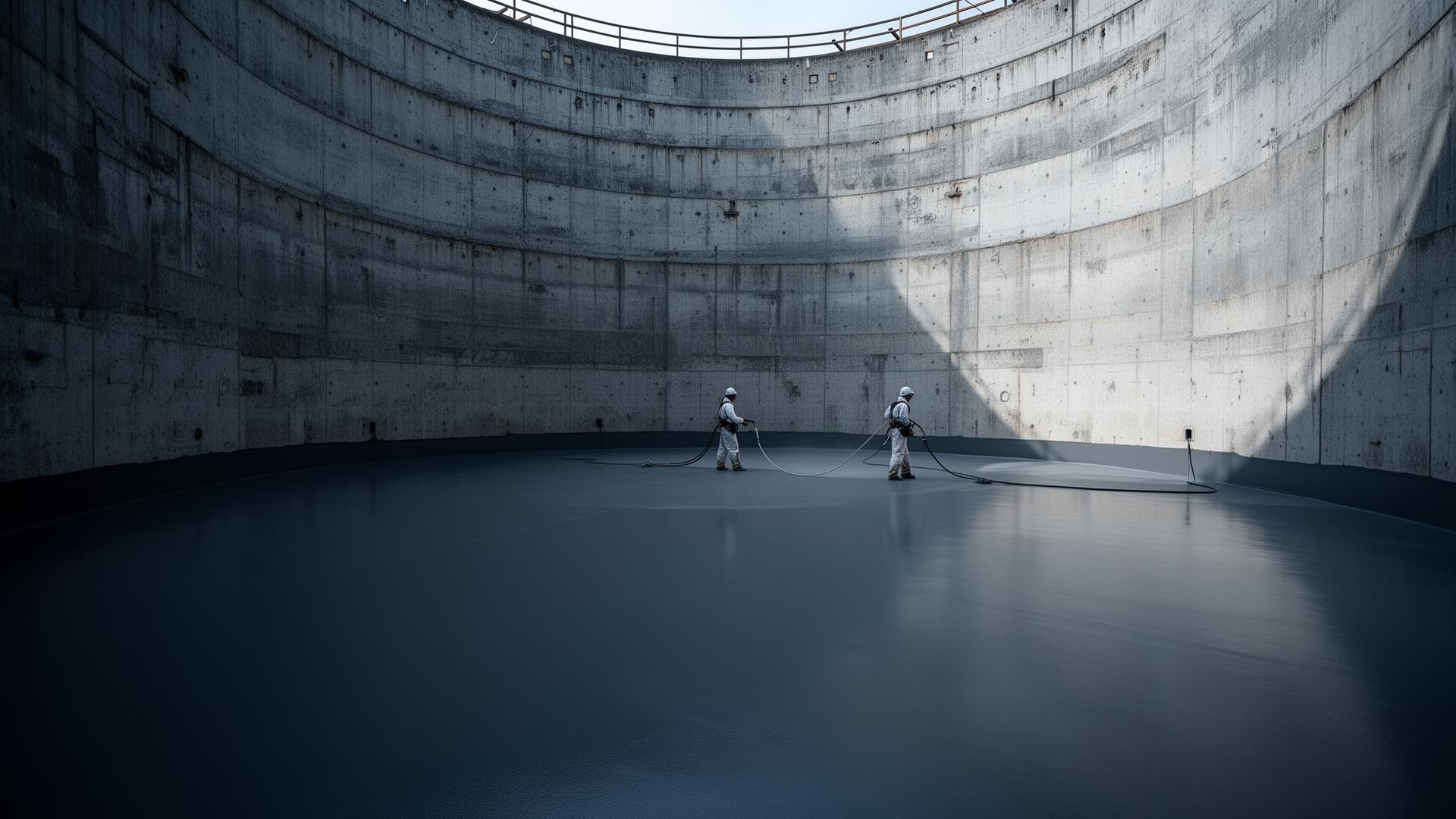
- Water tanks, basements, planters, wet areas
- Liquid Polyurethane
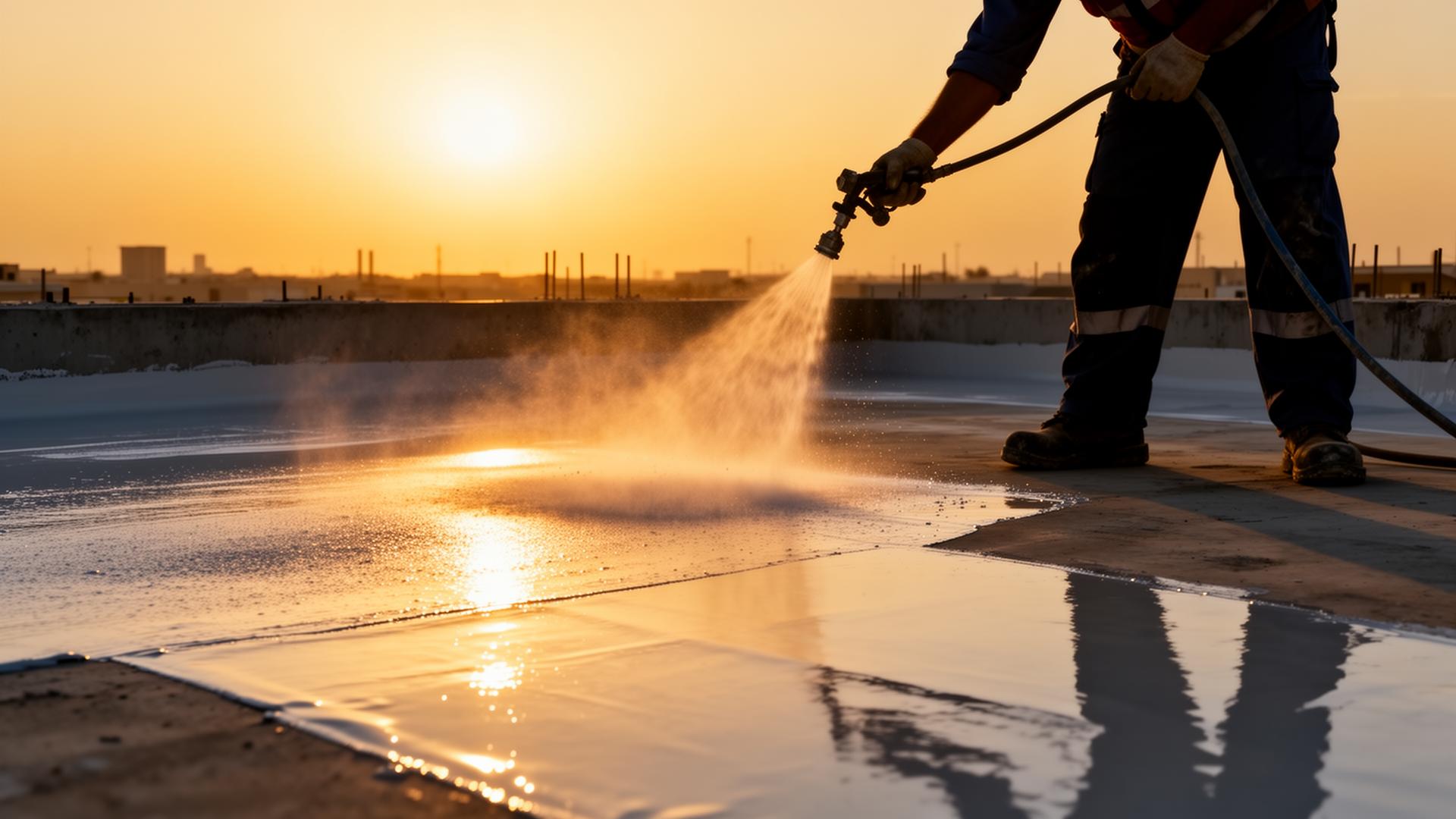
- Roofs, balconies, podiums, terraces
Service life
- Cementitious
- 15–20 years
- Liquid Polyurethane
- 10–15 years
Decision framework
- Static substrate with potential hydrostatic pressure → cementitious.
- Exposed substrate with thermal movement → liquid PU (or polyurea).
- Potable water tank → certified cementitious system.
- Planter or podium with overburden → liquid PU under protection board.
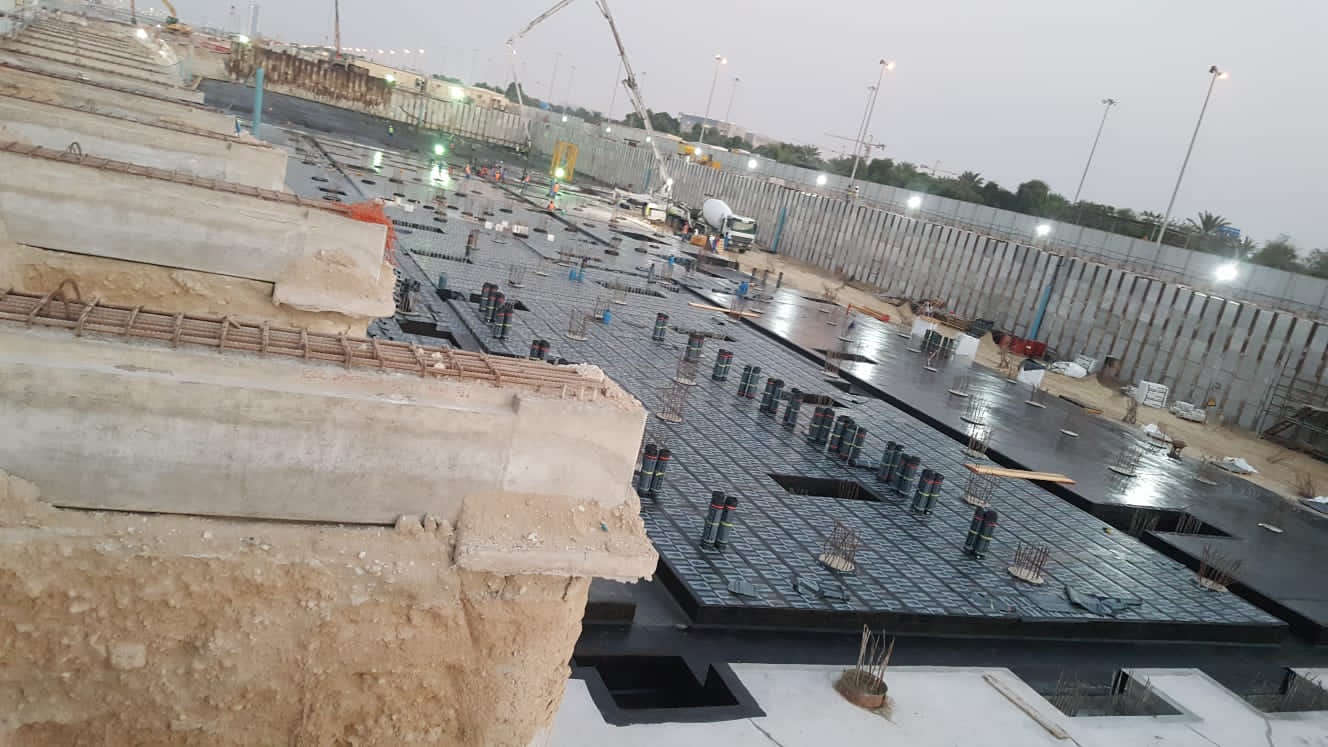
- Below-grade with risk of water ingress from outside → negative-side cementitious.
Tagscementitiouspolyurethanewaterproofing