

Infrared (IR) thermography is a non-destructive diagnostic method that uses a high-resolution thermal camera to visualize surface temperature differentials across a building envelope, roof, slab, or wall. Because water has a much higher thermal mass than the surrounding dry substrate, areas saturated by leaks or trapped moisture cool down and warm up at a different rate to their surroundings — appearing as distinct thermal anomalies on a thermogram. TEXSA uses calibrated FLIR cameras and supporting moisture instrumentation to pinpoint hidden roof leaks, wet insulation in built-up and PU-foam roofing, concealed plumbing leaks behind walls and slabs, façade water ingress, and thermal-insulation discontinuities — all without destructive opening of finishes. The method is most powerful when combined with a follow-up moisture meter sweep, an as-built drawing review, and (where required) a small confirmatory core to validate the IR findings before remedial scope is locked in.
Step-by-step
- 01
Site briefing and scope confirmation
- 02
Environmental conditions check
- 03
Baseline reference scan
- 04
Systematic grid sweep
- 05
Anomaly capture
- 06
Cross-verification with moisture meter
- 07
Reporting and remedial recommendation
What we use
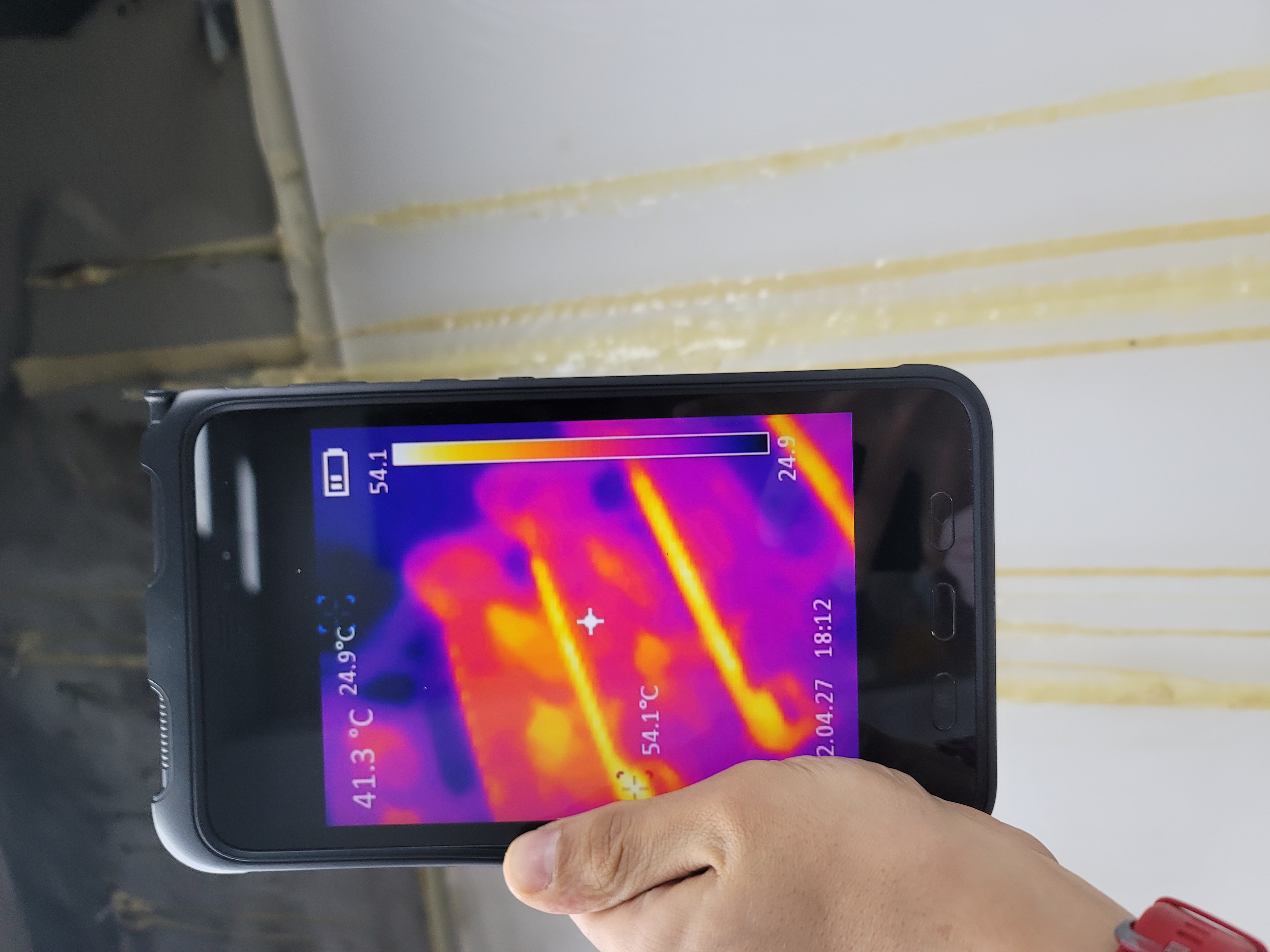 FLIR T-series IR camera (640×480, < 30 mK NETD)
Primary thermal imaging — high-resolution scan of roofs, walls, and slabs
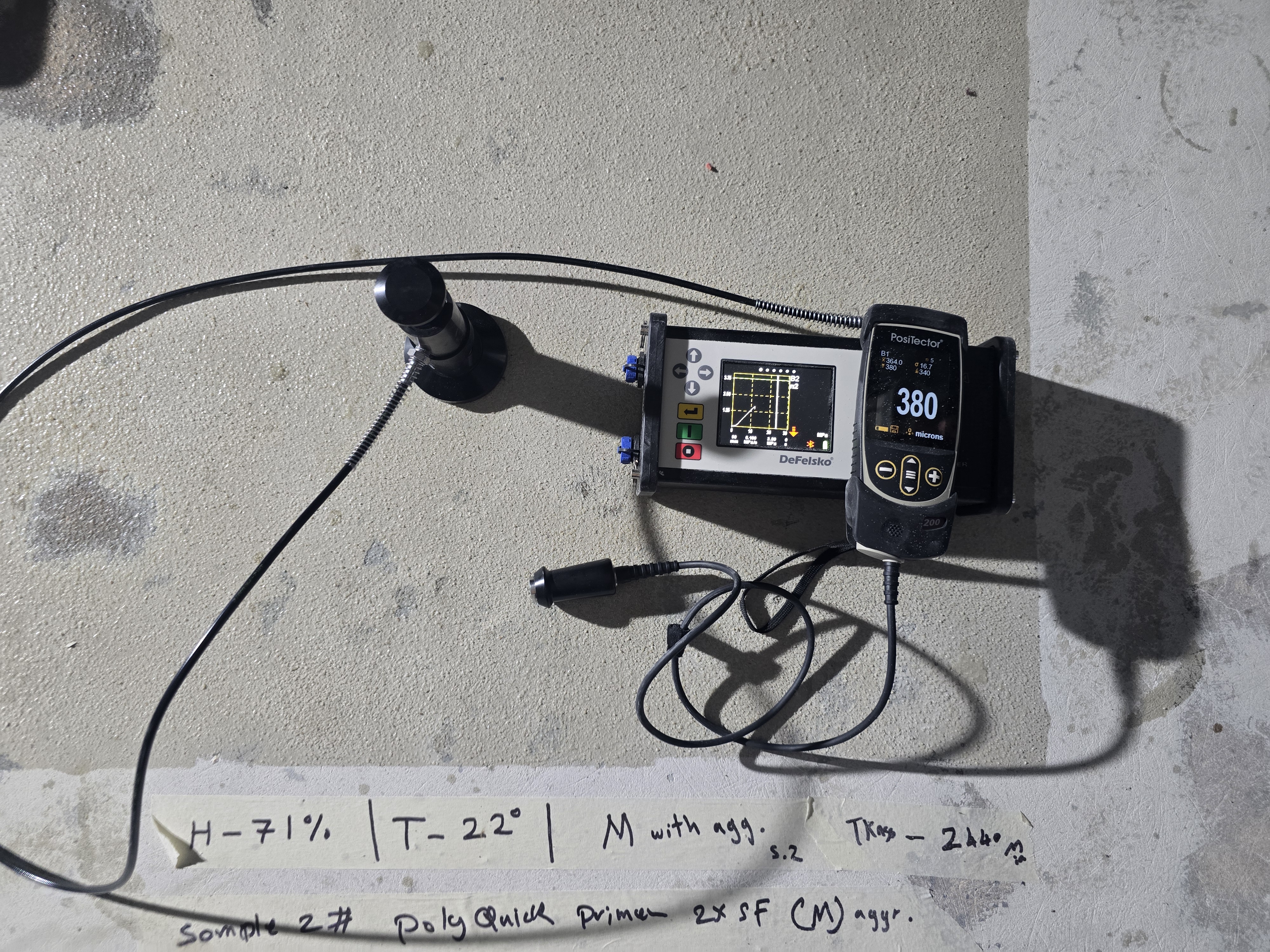 Moisture meter (pin and pinless)
Cross-verify thermal anomalies as actual moisture before opening finishes
- Ambient temperature and RH data logger
Qualify site conditions and ΔT window during the survey
- Reference thermocouple
Calibrate apparent temperatures and confirm emissivity assumptions
- DJI Mavic 3T thermal drone
Safe, full-coverage scans of large roofs, podiums, and tank tops
- Annotated reporting software (FLIR Thermal Studio)
Produce IR/visible image pairs, severity grading, and client-ready PDFs
Reference standards
- ASTM C1153Standard Practice for Location of Wet Insulation in Roofing Systems Using Infrared Imaging
- ASTM E1186Standard Practices for Air Leakage Site Detection in Building Envelopes and Air Barrier Systems
- ISO 6781Thermal insulation — Qualitative detection of thermal irregularities in building envelopes — Infrared method
- ISO 18434-1Condition monitoring and diagnostics of machines — Thermography — Part 1: General procedures
- BS EN 13187Thermal performance of buildings — Qualitative detection of thermal irregularities in building envelopes — Infrared method
Where this method falls short
Thermography is qualitative — it detects temperature differentials, not water directly. Its reliability depends heavily on site conditions: • A surface temperature differential of at least ~10°C between wet and dry zones is needed; surveys carried out in stable, overcast, low-ΔT conditions can produce false negatives. • Recent rainfall, dew, or wash-down water on the surface masks subsurface anomalies — surfaces must be dry for at least 24 hours. • Highly reflective materials (polished metal cladding, mirrored glass, fresh aluminium roofing) reflect ambient IR and require emissivity correction or alternative methods. • Sun-loaded roofs in mid-day UAE summer can saturate the sensor; scans are typically planned for early morning or post-sunset windows. • Strong wind (> 15 km/h) accelerates convective cooling and flattens thermal contrast. • IR cannot map the exact path of water travel between entry point and visible damage — confirmatory probing or tracer testing may still be required.